




Knowing your exact CS2 inventory value is a mandatory step for any serious player. The launch of Counter-Strike 2 brought massive engine upgrades alongside a complete disruption of a billion-dollar virtual economy.
The new Source 2 lighting system drastically changed how certain finishes reflect light in-game, causing skins that sat dormant in player accounts for years to suddenly skyrocket in price. Your collection currently operates as a highly volatile portfolio of digital assets. Whether you unboxed a random weapon case last night or you have been hoarding rare capsules, understanding the exact financial weight of your digital backpack is an absolute necessity.
The fastest way to check your CS2 inventory value
If you want the immediate answer to what your account is worth in real-world cash, you need to use a trusted third-party calculator. You must completely avoid the standard client marketplace for price checks because it shows inflated numbers that you cannot withdraw to a bank account.
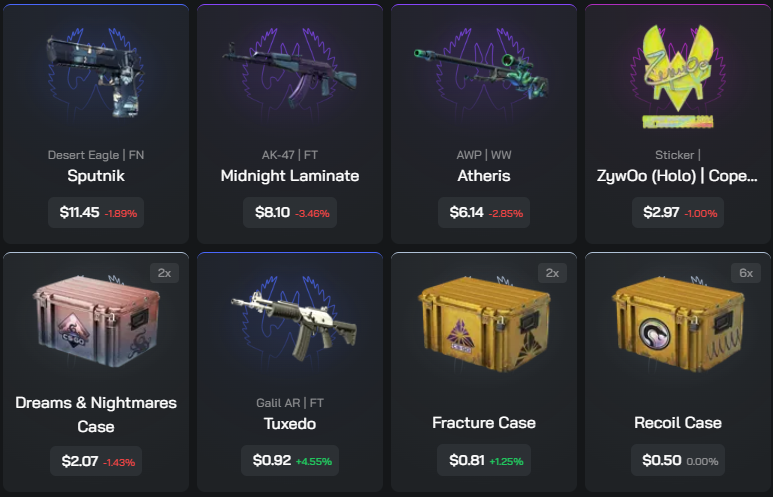
Finding your true CS2 inventory value requires dedicated community tools like CSFloat, ClashGG, or Pricempire that pull live peer-to-peer sales data.
Here is the exact process to get an accurate appraisal right now:
- Open your privacy settings on your Steam profile and set your inventory visibility to “Public“.
- Copy your custom profile URL or your exact SteamID from your browser address bar.
- Paste that link directly into the search bar of a reputable third-party calculator.
- Review the generated dashboard to see your liquid cash total, sorted by individual weapon worth.
The core mechanics behind your CS2 inventory value
Now that you have your baseline number, it is crucial to understand why that number fluctuates daily. The Counter-Strike economy operates on strict digital scarcity. Every time a player opens a weapon case, underlying algorithms dictate the extreme rarity of the drop. And no, the introduction of X-Ray Scanners to some countries did not really change this.
Because the supply of high-tier covert weapons and knives is strictly controlled by these microscopic drop rates, their real-world prices stabilize and act like tradable stocks.
Client funds versus real-world liquidity
The Steam Community Market operates as a closed loop. Valve applies a strict 15 percent tax to every transaction, permanently trapping that money within their ecosystem. If you want to know what your loadout is worth in spendable cash, you have to completely ignore official client prices.
On third-party platforms, buyers pay with actual currency, meaning the real-world CS2 inventory value usually sits around 70 to 75 percent of the standard market cap.
Advanced variables that dictate your CS2 inventory value
A basic calculator will give you the standard baseline price of an item. However, two seemingly identical rifles can have drastically different price tags based on microscopic, underlying details. Standard market graphs completely ignore these nuances.
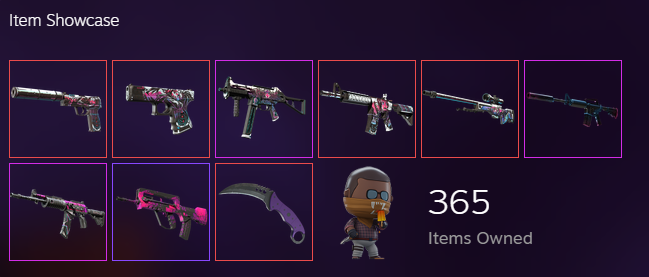
What if your weapon has high-quality and high-price stickers or a pattern that is not that common? What is the physical wear of your weapon? All of these things factor into the value of the weapon.
Float values and the overpay system
Every weapon skin drops with a randomly generated float value between 0.0 and 1.0, which dictates its physical wear. Collectors pay a massive premium for extreme floats.
A Factory New weapon with a 0.0001 float will cost significantly more than a standard 0.06 version. A skin holding the number one lowest float ranking in the world functions entirely as a unique collector item.
Rare pattern indexes and the Source 2 engine
Weapons from the Case Hardened, Fade, and Doppler series rely on specific pattern seeds from 1 to 1000.
When the game transitioned to the new lighting engine, the visual appeal of these patterns shifted dramatically. A Blue Gem pattern on a Karambit can turn a standard knife into an asset worth tens of thousands of dollars.
The hidden premium of applied stickers
Applying a rare sticker to a weapon adds a permanent fraction of that sticker’s unapplied price to the gun. The position of the sticker heavily influences the final price tag, with the spot closest to the player being the most desirable.
Vintage items holding Katowice 2014 holographs or Boston 2018 signatures require specialized appraisals to find their exact worth.
Understanding liquid assets versus collector items
Different items behave in vastly different ways on the open market. When calculating your total CS2 inventory value, you must understand the difference between items you can sell today and items that take months to move.
| Asset Type | Market Behavior | Examples |
| Liquid Items | Sells almost instantly at market price due to high daily demand. | AK-47 Redline, standard weapon cases, AWP Asiimov. |
| Semi-Liquid | Takes a few days to find a buyer, usually at a slight discount. | Standard knives like the Gut Knife Doppler, mid-tier gloves. |
| Illiquid | Requires specialized buyers and heavy negotiation. | Number one float skins, rare Blue Gem patterns, high-tier souvenir weapons. |
How mastering these concepts improves trading in CS2
Having a firm, data-backed grasp on your actual CS2 inventory value is your absolute best defense against predatory deals. The marketplace is notoriously competitive, and knowing your exact margins prevents you from taking massive losses on unfair swaps.
When you dive into trading in CS2, other users will constantly attempt to use inflated client prices to manipulate you. They will offer an illiquid item that looks expensive on paper while being completely impossible to sell for real cash.
