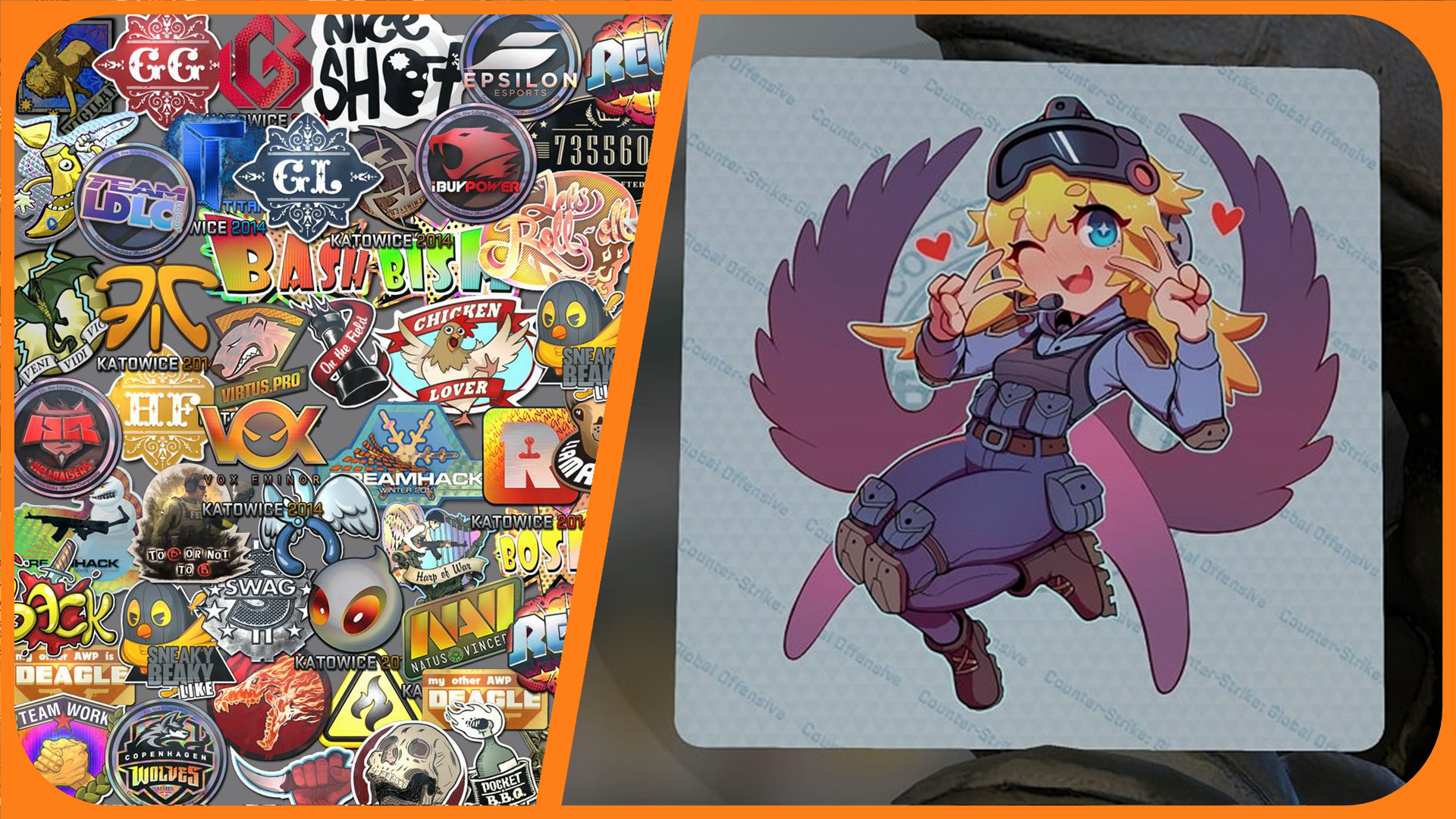




CS2 stickers are the cosmetic detail you notice right after a round ends: four identical logos perfectly lined up on an AK, a signature that’s been scraped just enough to look “worn-in,” or a craft so clean it makes a budget skin feel premium.
That’s the fun part. The dangerous part is that stickers are also a little economy of their own. Apply one in the wrong spot, buy into the wrong hype cycle, or forget about trade restrictions, and you can burn value fast.
If you want more Counter-Strike guides like this, start at Pley.gg.
CS2 stickers: What they are and why people care
Stickers are cosmetic items you apply to weapons, usually on top of a weapon skin. They do not change damage, recoil, accuracy, or anything gameplay-related. They’re pure style, which is exactly why they became the core of CS2 customization. On top of everything, stickers also work with skins for your weapons, making them highly customizable.

Credit: Steam Store
Once you apply a sticker, it’s consumed and becomes part of that weapon, you cannot “take it back” into your inventory.
Players care for four main reasons:
- Identity: Rep a team, player, event, or just a design you like.
- Crafting: The right sticker combo can make an average skin look intentional.
- Collecting: Discontinued tournament sets and iconic designs are status items.
- Trading culture: Sticker demand influences sticker prices, capsule prices, and the value of stickered skins.
How CS2 stickers work now (Placement changed everything)
CS2 made stickers far more “designer-friendly” by adding flexible placement. Stickers can be positioned and rotated more freely when applied, and there’s a zoom option to line them up properly.
CS2 also supports up to five stickers on a single weapon. Does this help you with your ranking? Not really. Does it make your weapon look cool? Absolutely!
If you take one thing from this guide, make it this: Clean placement beats rare stickers most of the time.
CS2 sticker finishes explained
Sticker “finishes” are the visual variants you’ll see in capsules. Different tournament sets use different finish pools, but these are the big ones you’ll run into most often.
| Finish | What it looks like | Where you usually see it | Why players want it |
|---|---|---|---|
| Paper | Flat, readable | Common in almost every set | Cheap, clean, great for minimal crafts |
| Foil | Metallic sheen | Used in some Major capsules | Premium look without going full rainbow |
| Glitter | Sparkly shimmer | Often used in champions or special sets | Bright pop that still reads well |
| Holo | Color-shifting glow | Many tournament sets | The classic “craft centerpiece” |
| Embroidered | Textured, stitched look | Used in some newer tournament pools | Different kind of premium, strong readability |
| Gold | Gold finish, top rarity tier | Tournament sets, autographs | The flex tier, especially for signatures |
How to get CS2 stickers
There are four realistic paths, and each fits a different type of player. CS2 stickers are generally easy to obtain, but it all depends on what you are looking for.
Buy capsules in-game (especially during Majors)
Tournament sticker capsules are usually sold in-game for a limited time around Major events. These tournaments often bring a unique look to each sticker, making them a collectable for players.
Moreover, these capsules often include a note that part of the proceeds support the included teams and organizations.
Buy the exact CS2 stickers you want on the Steam Community Market
If you already know what you’re crafting, the Market is the “no gambling” option.
One important detail: Many CS2 items purchased on the Market display a one-week restriction where they can’t be traded and can’t be re-listed. The main reason for this is due to the Trading Protection system, that prevents people who had their accounts hacked from spending money/sending items to a different account. Always read the listing note before you buy.
Trade with other players
Trading still exists, but CS2 item trades can come with Trade Protection: for a period after a trade, the items can’t be consumed, modified, or transferred. If you are, however, planning on trading with other players, make sure you can trust the person you are trading with as there are plenty of scam accounts going about.
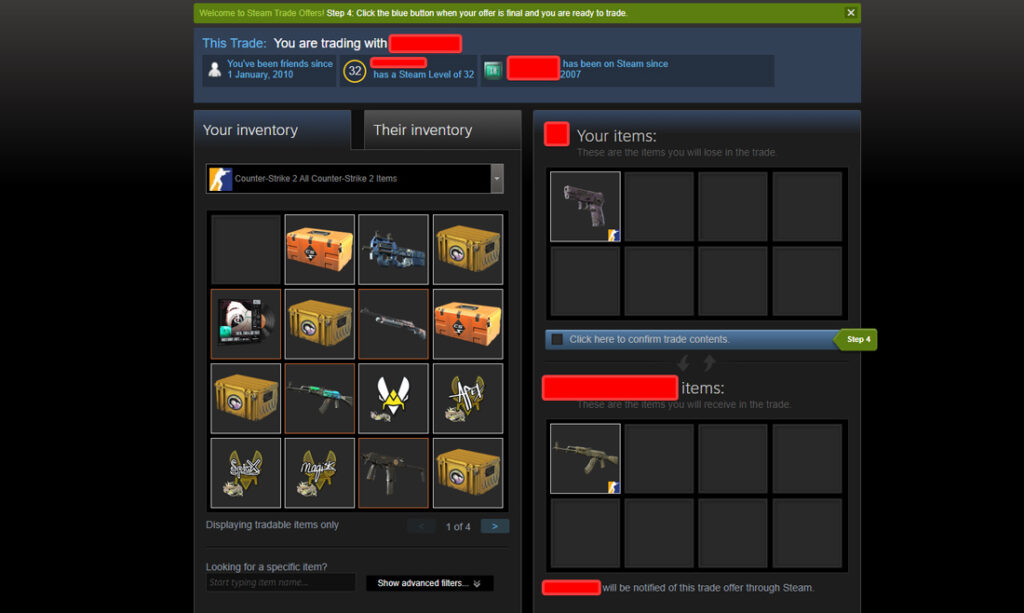
Credit: FWweekly
Now, that doesn’t mean you should be wary of every person that is interesting in trading with you, just make sure you do your due diligence.
This matters for stickers because “consume/modify” includes things like applying stickers, scraping stickers, or moving items into some storage workflows.
Buy a skin that already has stickers applied
This is the most underrated method. You’re paying for the final look, not the lottery. It’s also how many people get “expensive-looking” crafts for less than the sticker total, especially if the seller values the base skin more than the craft.
There are plenty of options for this, from the Steam Marketplace, to plenty of third-party websites that built their entire platforms on this. However, you should logically expect to have to spend more money for a higher quality.
How to apply and scrape stickers (without instant regret)
Applying stickers is straightforward: Pick the weapon in your inventory, choose apply, then place, rotate, and confirm. Flexible placement rewards patience more than speed.
Stickers are fairly easy to understand and easy to slap onto your weapon, as can be seen in this short guide video. However, the placement of your sticker means a lot, so it’s vital to do devote your time to it.
Scraping is the “wear it down” mechanic. Many tournament sticker descriptions explain that you can scrape the same sticker multiple times to make it look more worn, until it’s removed from the weapon.
Scraping is a commitment! You’re not “editing,” you’re permanently degrading the sticker.
CS2 stickers trading basics (the stuff that actually matters)
Sticker value is mostly supply, demand, and how good it looks in real crafts.
A few practical rules:
- Buy the look, not the rarity. Paper can craft better than flashy finishes.
- Capsule supply changes the market. Limited-time sales create waves of new supply, and prices often behave differently once that supply stops.
- Remember the “cooldown reality.” Between Market restrictions and Trade Protection windows, flipping instantly is harder than it used to be.
- If you reverse Trade Protected trades, reporting on Valve’s system notes you can be hit with a restriction period on trading and Market use.
The most popular CS2 stickers right now
“Popular” changes fast, but these categories consistently dominate crafts and Market activity.
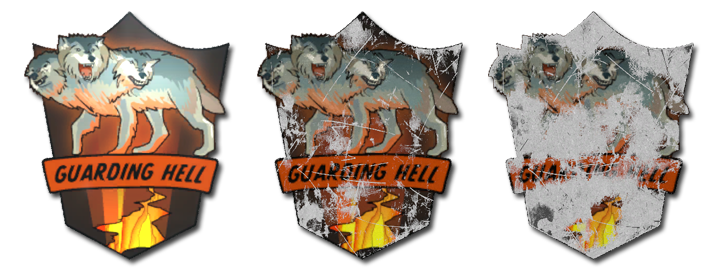
Credit: Counter Strike 2
Moreover, because stickers do not really affect performance, they are very sought out, as they can make the AK you are looking at for hours during a week much more appealing.
The most legendary stickers in CS history: Katowice 2014
If you’ve ever heard someone say “Kato crafts” like it’s a separate hobby, this is what they mean.
Katowice 2014 stickers come from one of the earliest Valve-sponsored Major eras, and they’ve become the gold standard for “legendary” sticker status. The supply is permanently limited, the designs are instantly recognizable, and the best-looking variants became collector trophies.
What makes them special:
- They’re scarce by nature. The capsules were sold for a limited time, and every sticker applied over the years reduced the remaining supply.
- The holos in particular have a distinct look that “reads” even from a distance, which matters more than people admit.
- They’re tied to iconic orgs and a formative era of competitive Counter-Strike, so collectors care about the story as much as the pixels.
Names that show up constantly in high-end conversations include Titan, iBUYPOWER, Reason Gaming, Vox Eminor, and Team Dignitas, especially their Holo variants. If you see a clean 4x craft with one of these, it’s usually not an accident, it’s a statement.
Recent Major team logos and autographs
Newer Major sets become the default craft toolkit because they share an event theme, match each other visually, and come in finish pools people actually like. Recent examples include capsules with Paper, Foil, Holo, and Gold variants, and some sets also include Embroidered variants.
Autographs stay popular because they are personal and readable, and champion-style releases have used finish pools like Paper, Glitter, Holo, and Gold.
Classic “trophy” stickers that never stop being desirable
Older discontinued stickers and famous tournament eras still function like collectibles. Even if the design is simple, scarcity and nostalgia do heavy lifting. This is less about CS2 customization and more about flexing that you own something the market can’t easily replace.
Clean craft staples on simple base skins
There’s a strong trend toward high-contrast, minimal crafts: Readable logos on clean finishes, symmetrical placement, and just enough shine to pop in-game.
It’s not exciting, which is exactly why it looks expensive. Sometimes less is more.
CS2 customization: Quick craft rules that make sticker setups look premium
You don’t need rare stickers to make a craft look intentional.
- Pick one theme: One team, one color family, or one vibe.
- Use symmetry: Mirrored placement looks “designed,” not random.
- Leave breathing room: Negative space is part of the craft.
- Limit loud finishes: One shiny centerpiece sticker plus supports often looks cleaner than five competing holos.
- Scrape lightly if you scrape at all, you can always scrape more, you can’t undo it.
- Test readability: If it’s messy in the inspect screen, it will be worse in motion.
- Treat placement like aim training: Slow, deliberate, consistent.
