





There is nothing more frustrating than grinding your way up the ranked ladder, holding a perfect angle, and getting instantly one-tapped by a player who somehow always knows exactly where you are. Cheating in tactical shooters is an incredibly frustrating reality, but Riot Games just delivered an absolute masterclass in dealing with it.
If you have seen the massive wave of cheaters crying on forums about their PCs no longer booting, grab some popcorn. Riot has officially upgraded the Vanguard anti-cheat system to target some of the most expensive and elusive cheating hardware on the market.
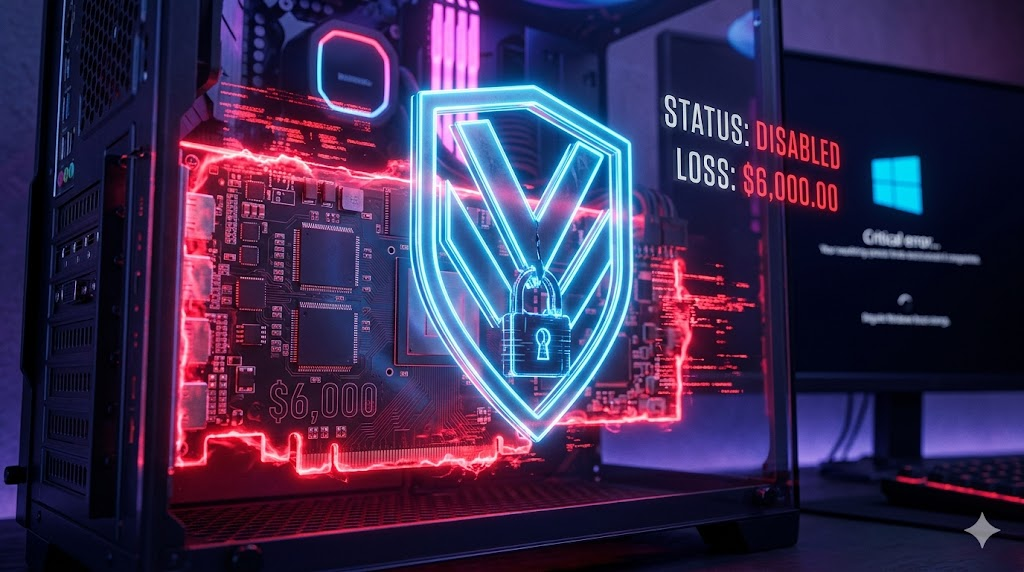
Here is exactly how Vanguard is neutralizing high-end hacks and turning $6,000 setups into literal paperweights.
What Are DMA Cheats? (And Why Do They Cost $6,000?)
To understand why this update is such a massive victory for competitive integrity, we have to talk about how modern, high-tier cheating actually works.
Historically, most players are familiar with software cheats – programs you download and run in the background. Because Vanguard operates on a strict kernel level, it usually detects and bans these cheap software cheats almost instantly.
To bypass this, dedicated cheaters started using DMA (Direct Memory Access) hardware.
- The Hardware: Instead of a simple software download, cheaters install a physical secondary PCIe card directly into their motherboard.
- The Exploit: This hardware connects to a completely separate, second computer. It physically reads VALORANT’s game memory in real-time from the outside, bypassing the main PC’s operating system entirely.
- The Cost: Because this requires custom firmware and dedicated hardware, these setups are wildly expensive, often costing players upwards of $6,000.
Vanguard Strikes Back
For a while, DMA cheats were the elusive “undetectable” boogeyman of high-ELO lobbies. But Riot Games has been quietly working behind the scenes with major motherboard manufacturers -specifically MSI, ASUS, and ASRock – to develop a targeted detection method.
With the latest update, Vanguard now actively scans the firmware connected through SATA and NVMe systems. When it detects an unauthorized DMA device attempting to read the game’s memory, it immediately cuts it off.
Vanguard blocks all communication between the cheating hardware and the PC. The result? The cheat is completely neutralized, and the user is handed a permanent ban.
The “Bricked PC” Panic
If you look at social media right now, you will see panicking hackers claiming that Vanguard “bricked” their expensive gaming rigs. The reality is actually much funnier.
Vanguard isn’t destroying their PCs. When the anti-cheat detects the DMA hardware, it triggers a system-level security block. The host PC essentially protects itself by refusing to boot into Windows as long as the cheating hardware is plugged in. To get their PC working again, these players have to completely reinstall Windows and physically remove their expensive cheat hardware, rendering their $6,000 investment entirely useless.
Riot Games showed absolutely zero sympathy for the banned players, taking to X (formerly Twitter) to deliver a brutal and hilarious send-off:
“Congrats on your $6k paperweights.” – @riotgames
The Ongoing Kernel-Level Debate
While the competitive community is universally celebrating this massive ban wave, it has reignited the classic debate around Vanguard’s immense power. Because Vanguard runs at such a deep system level, it has the authority to alter firmware behavior and block hardware communication. For some privacy advocates and PC enthusiasts, that level of access remains a point of discomfort.
However, from an esports and competitive standpoint, the reality is clear: as hackers go to extreme, expensive lengths to ruin the game, developers have to match that commitment.
For now, the ranked queue just got a whole lot cleaner. Make sure to enjoy your matches today, knowing that somewhere out there, a cheater is staring at a $6,000 paperweight.
