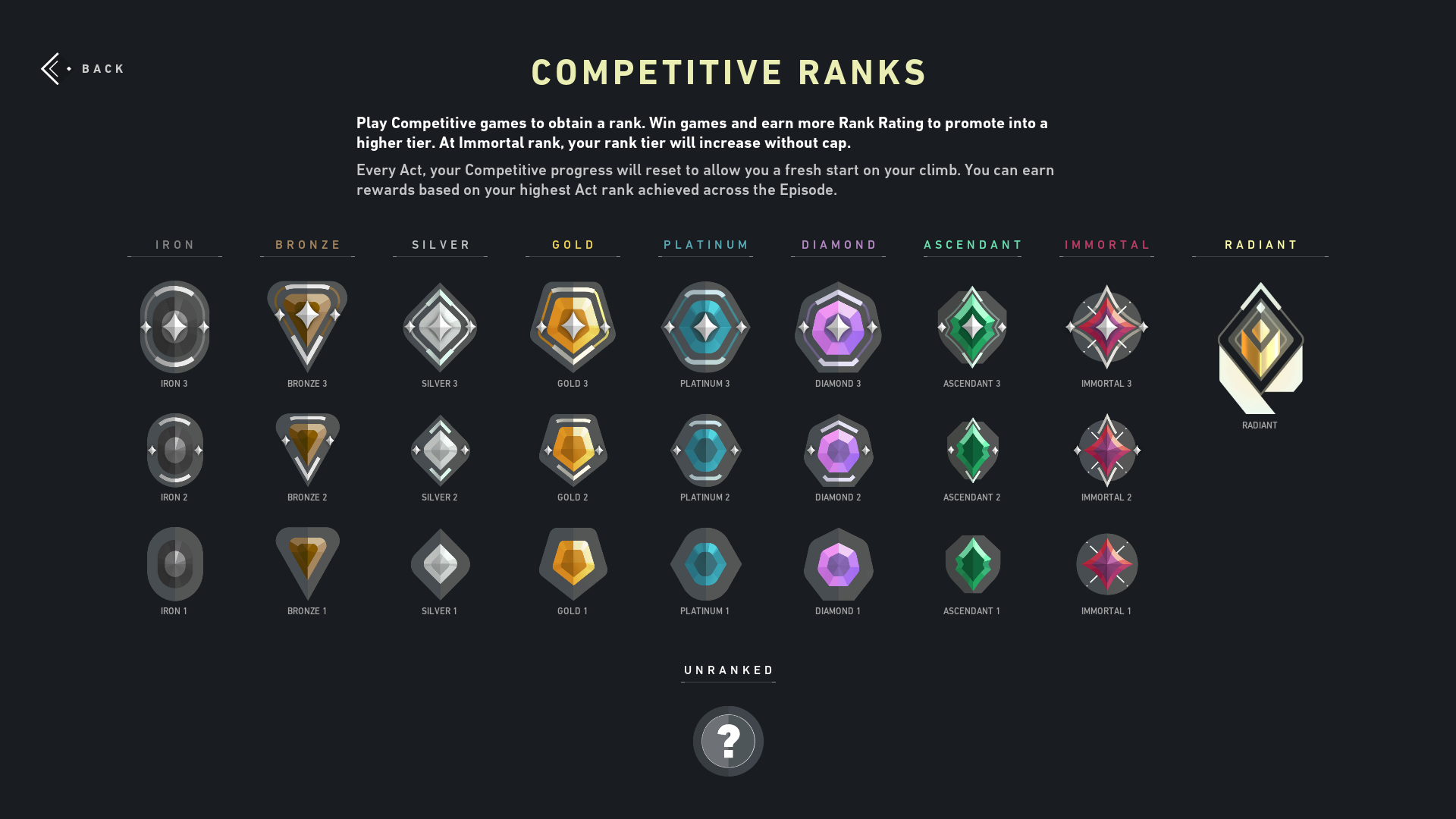






Valorant is a tactical shooter that rewards skill, teamwork, and strategy. Understanding the Valorant rank system is essential for players looking to climb in competitive play. This guide explains how ranks work, how to improve, and what to expect in Valorant ranked matches.
What are Valorant ranks
Valorant ranks measure player skill through a combination of performance, win rate, and match consistency. Each player has an overall Valorant rank and a separate Act rank for each act. Act rank reflects your highest win in an act and determines the rewards you earn at the end of that act.
Ranks progress in order from Iron to Radiant, with three sub-tiers for each rank except Radiant. The full ranking list is:
| Rank Tier | Sub-Tier | Description |
|---|---|---|
| Iron | Iron 1 | Starting rank for new competitive players |
| Iron 2 | Progressing through beginner levels | |
| Iron 3 | Highest Iron sub-tier | |
| Bronze | Bronze 1 | Entry-level mid-tier rank |
| Bronze 2 | Improving skill and game sense | |
| Bronze 3 | Highest Bronze sub-tier | |
| Silver | Silver 1 | Competitive progression begins |
| Silver 2 | Developing consistency and aim | |
| Silver 3 | Highest Silver sub-tier | |
| Gold | Gold 1 | Intermediate ranked skill |
| Gold 2 | Stronger mechanics and map knowledge | |
| Gold 3 | Highest Gold sub-tier | |
| Platinum | Platinum 1 | Advanced gameplay and decision-making |
| Platinum 2 | High-level team coordination | |
| Platinum 3 | Highest Platinum sub-tier | |
| Diamond | Diamond 1 | Elite gameplay and mechanical skill |
| Diamond 2 | Highly competitive and strategic play | |
| Diamond 3 | Highest Diamond sub-tier | |
| Ascendant | Ascendant 1 | Top-tier players showing exceptional skill |
| Ascendant 2 | Consistently performing at high levels | |
| Ascendant 3 | Highest Ascendant sub-tier | |
| Immortal | Immortal 1 | Professional-caliber competitive play |
| Immortal 2 | Strong contender for high-level ranked | |
| Immortal 3 | Highest Immortal sub-tier | |
| Radiant | N/A | Top 500 players per region, pinnacle of ranked |
Valorant rank distribution
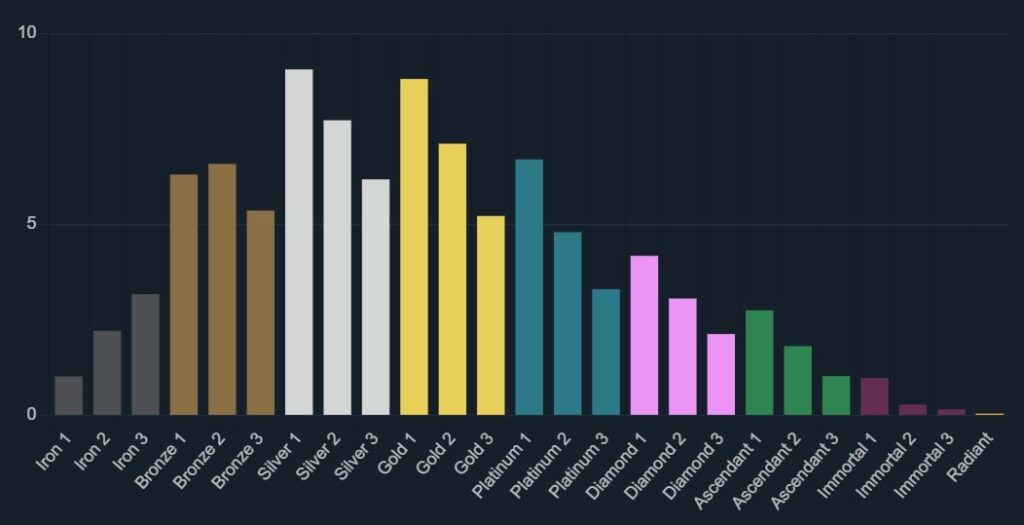
Valorant ranks are distributed unevenly, reflecting the competitive nature of the game. The majority of players are in the lower tiers, with Silver 1 being the most populated rank at around 9 percent. Higher ranks like Immortal and Radiant are extremely rare, with only 0.04 percent of players reaching Radiant.
Ranked requirements and placement matches
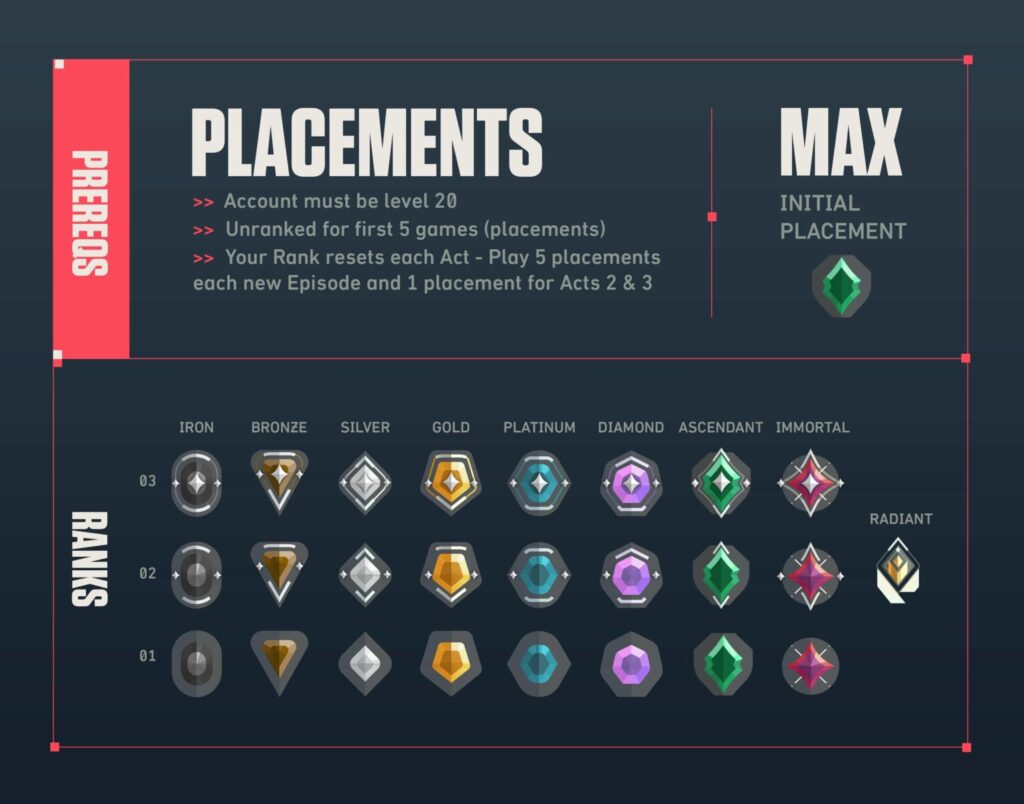
To play Valorant ranked, you must reach account level 20 and complete placement matches. At the start of each act, players complete five placements in Episode 1, but only one placement per subsequent acts within an episode. Your rank resets at the start of each act, but your previous matchmaking rating is considered in new placement matches.
Party and rank disparity rules
Valorant allows players to queue with friends under certain conditions:
- Groups of four are not allowed
- Groups of two or three must follow rank disparity rules
- Groups of five have no restrictions, though rank rating gains and losses are affected by the disparity
Rank disparity limits ensure fair matchmaking. For example, if the lowest player is Iron or Bronze, the highest cannot exceed Silver. For Platinum or higher players, the maximum rank of teammates can only be one tier above the lowest player.
How Valorant ranked works
The Valorant ranking system uses a hidden Matchmaking Rating (MMR) to determine skill and match players with similar abilities. Winning increases your rank rating, while losses decrease it slightly. Progression is faster in lower ranks and slows at higher ranks, with Immortal and Radiant requiring more points to advance.
Consistent performance and game sense are critical for climbing. Practicing in firing range or mastering agents can improve aim and movement, which leads to higher rank rating gains.
Tips to rank up faster
- Focus on mastering a few agents to maximize impact
- Improve aim and movement through regular practice
- Communicate effectively with your team using voice chat
- Maintain a positive attitude and avoid tilting
- Prioritize winning rounds over kills alone
Valorant agents fall into four roles: Duelists, Initiators, Controllers, and Sentinels. Understanding each role allows you to maximize your impact in matches:
- Duelists excel at entering sites and 1v1 engagements
- Initiators gather information and disrupt enemy setups
- Controllers manage areas of the map and block vision
- Sentinels anchor sites and create chokepoints to defend effectively
Valorant ranked progression
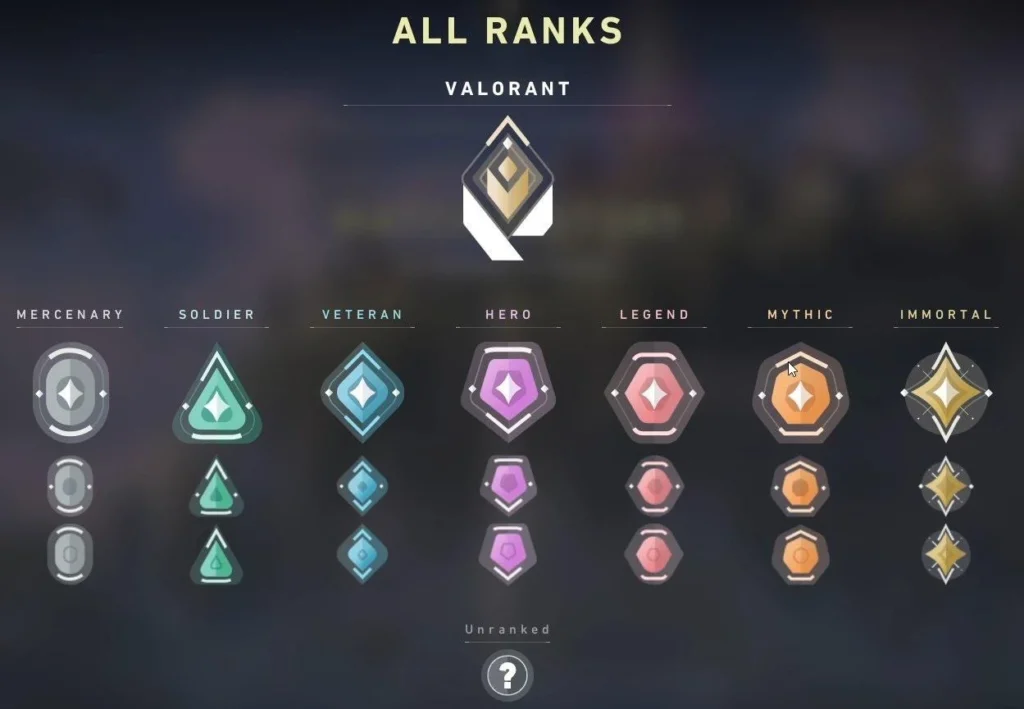
Players begin ranked at Iron 1 after completing 20 unrated games. Progression through the ranks requires practice, strategic play, and teamwork. While most players settle in Silver and Gold, improving your mechanics and map knowledge can lead to higher tiers such as Immortal or Radiant.
There is no rank decay in Valorant, but your MMR may adjust after periods of inactivity, affecting the average skill level of opponents. Placement matches are also used to recalibrate your rank at the start of each act or after inactivity.
Climbing in Valorant ranked can be challenging but rewarding. By understanding the ranking system, practicing consistently, and mastering your favorite agents, you can steadily improve your Valorant rank. Following professional play and competitive updates can provide additional insights to give you an edge in ranked matches.
For more Valorant ranked guides, tips, and esports coverage, check out Pley.gg
Sources:
FAQ: Valorant ranks and placements
What tips can help me rank up faster in Valorant?
Focus on improving aim, movement, and map knowledge. Master a few agents, communicate with your team, maintain a positive attitude, and practice consistently in firing range or unrated matches.
What are the party and rank disparity rules in Valorant ranked?
Groups of four cannot queue together. Groups of two or three must stay within rank disparity limits depending on the lowest player’s rank. Five-player groups have no restrictions, but rank rating gains may be affected.
How many ranked games do I need to finish placement in Valorant?
At the start of each episode, you must complete five placement matches. For subsequent acts within the same episode, only one placement match is required.
What is the minimum level to play Valorant ranked?
Players must reach account level 20 before they can participate in Valorant ranked matches.
