


The journey from CS 1.6 to CS2 is a wild ride through gaming history that triggers massive nostalgia for veterans of the server. For millions of players, the 2003 classic is not just a retro game. It represents the golden standard of tactical shooters.
Looking back at old CS brings up memories of dragging heavy CRT monitors to local LAN cafes and relying purely on raw mechanical skill. It was an unforgiving era of gaming, demanding perfection and game sense above all else. The classic version built the foundation for everything the competitive community knows and loves today. However, the leap between these two eras is staggering. From the darkest corners of legacy maps to the bright and shiny volumetric smokes of today, the game has evolved in incredible ways.
The shift from CS 1.6 to CS2: Ammo Management
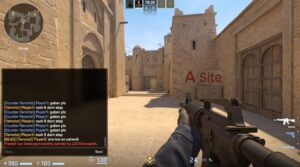
A recent update by Valve completely changed how players read their user interface. The modern game now displays magazine counts instead of total bullet counts.
This UI change feels incredibly sleek, but it highlights a massive departure from how things used to work. In the retro era, players had to navigate clunky text menus to buy individual ammo for their weapons. You could not just buy a rifle and run out of spawn.
Players had to hit specific keyboard shortcuts to manually purchase primary ammo and secondary ammo. Managing your gear meant literally counting your bullets and buying extra clips before a round started.
How the Economy Evolved
When making the transition from CS 1.6 to CS2, the economy and purchasing mechanics look like two different worlds. The modern loadout system lets players customize exactly what they bring into a match, presented in a clean, visual grid.
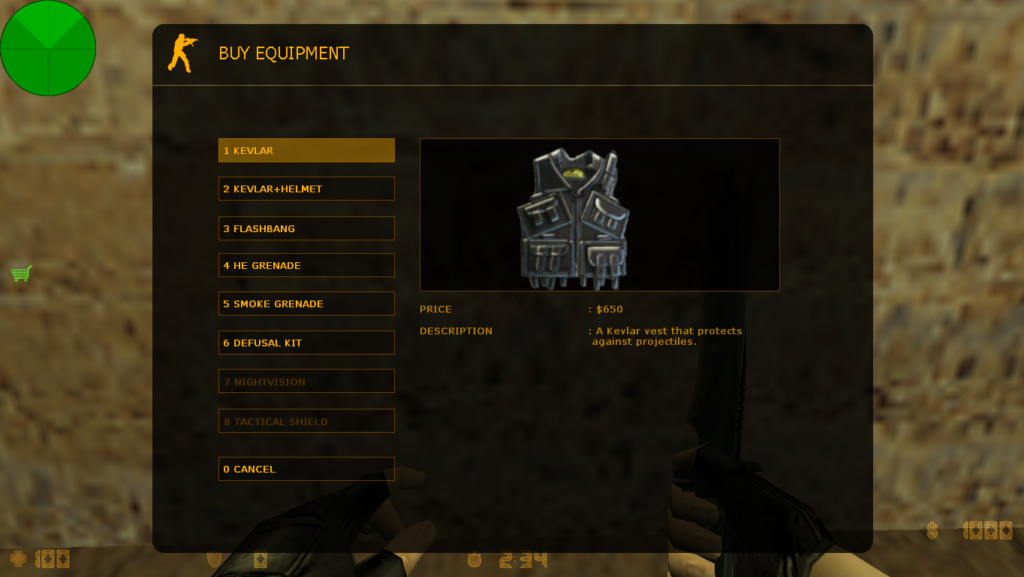
Back in the day, the buy zone was a frantic typing test. Memorizing number combinations (B 4-3, B 4-2, B 1-4, etc.) to quickly buy your gear was a mandatory rite of passage. If you missclicked, there was no refund button to save your hard-earned cash. You were simply stuck playing the round with a weapon you never intended to buy.
Gear left behind from CS 1.6 to CS2
The old buy menu used to be filled with quirky items that simply did not make the cut for modern competitive play.
Night Vision Goggles were a staple of the old buy zones. For a hefty price tag, players could equip these goggles and activate a loud, high-pitched green filter. It was mostly a massive flex or a tool used for incredibly dark custom maps, but it had an undeniable charm.
Then there was the notorious Tactical Shield. Available only to the Counter-Terrorist side, this riot shield allowed players to completely block incoming fire while wielding a pistol. It was a hilariously broken mechanic that caused endless frustration in casual lobbies. However, later on, Valve introduced the R8 Revolver, makings the gameplay feel a bit broken again. Fortunately for the competitive integrity of the game, gadgets like these were removed completely.
Map design evolution: CS 1.6 to CS2
Comparing CS 1.6 to CS2 reveals a massive shift in how battlegrounds are constructed. While legendary locations like de_dust2 and de_inferno survived the test of time, many iconic maps were left in the past.
Remember the pouring rain on de_aztec? The iconic bridge chokepoint and the muddy water below made it an atmospheric masterpiece. Valve eventually scrapped it due to severe balance issues.
But the casual side of the map pool is where nostalgia hits the hardest. Maps like de_rats completely changed the scale of the game. Players were shrunk down to the size of bugs, fighting around giant refrigerators and massive kitchen sinks. Then there was de_westwood, dropping players straight into a spaghetti western. Fighting around wooden saloons and dusty streets offered a completely different vibe from standard defusal missions.

For pure, chaotic warmups, fy_snow was the undisputed king. Spawning around a central block of snow and instantly picking up weapons off the ground created an unforgettable, fast-paced frenzy.
The wild west of community servers in old CS
The jump from CS 1.6 to CS2 also highlights how players engage with custom content. Back in the day, the community server browser was the absolute lifeblood of the game. Players did not just queue for standard five-versus-five matches. They spent hours grinding highly specific custom game modes.
The awp_india map is a perfect example of this era. It was a sniper playground where players honed their flick shots in brutal, long-range duels.
Similarly, knife-only arenas like ka_35hp forced players to master movement, spacing, and the tricky hitboxes of melee combat. These custom game modes created entirely unique subcultures within the broader player base. From surfing and climbing maps to bizarre zombie escape servers, the sandbox nature of old CS allowed for endless creativity that shaped the modern modding community.
Missing firepower from the old CS days
It is impossible to talk about the transition from CS 1.6 to CS2 without mourning the old arsenal. While the AK-47 and M4A1 remain the undisputed kings of the server, several legendary weapons were swapped out over the years. Moreover, if you were to drop a player from back then into Season 4 of CS2, they would probably only find the AK and M4A1 familiar.
Some weapons changed names, while others received complete mechanical overhauls. Here are a few iconic guns that never saw the light of modern gameplay:
- Schmidt Scout: The spiritual predecessor to today’s SSG 08, boasting an entirely different feel and crosshair bob.
- Krieg 552: Replaced by the SG 553, this scoped commando rifle had a very distinct, rapid-fire sound when zoomed in.
- Clarion 5.56: The old-school Famas had a completely different burst-fire rhythm that veterans still miss.
- Schmidt Machine Pistol: The silenced TMP was a stealthy dream for eco rounds, later replaced by the loud and clunky MP9.
- Leone 12 Gauge Super: The classic pump-action shotgun that dominated close-quarters combat before the Nova took its place.
Gunplay Mechanics and Paper Walls
The firearms themselves are only half the story. The way bullets interact with the world is a defining difference between eras. In the 2003 classic, nearly every surface felt like it was made of paper.
Players with incredible map knowledge could spam bullets through multiple thick walls to secure eliminations. Defending a bombsite often meant shooting at specific pixels on a wall rather than aiming at actual player models. Today, materials are strictly defined, and wallbangs are carefully calculated for balance rather than chaotic fun.
The core of the game remains untouched. Five terrorists planting the bomb, five counter-terrorists trying to stop them, and an incredibly high skill ceiling. However, back then, the only system requirements were to have a PC and an internet connection. There were no cases to open, no stickers to put on your weapons and no ranks to chase. Just pure fun and chaos.
Yet, the details have shifted dramatically. From buying individual rifle clips in a text menu to reading a sleek magazine counter on a subtick server, the transformation is monumental. The franchise survived for over two decades because it knew exactly what to keep and what to leave behind.
