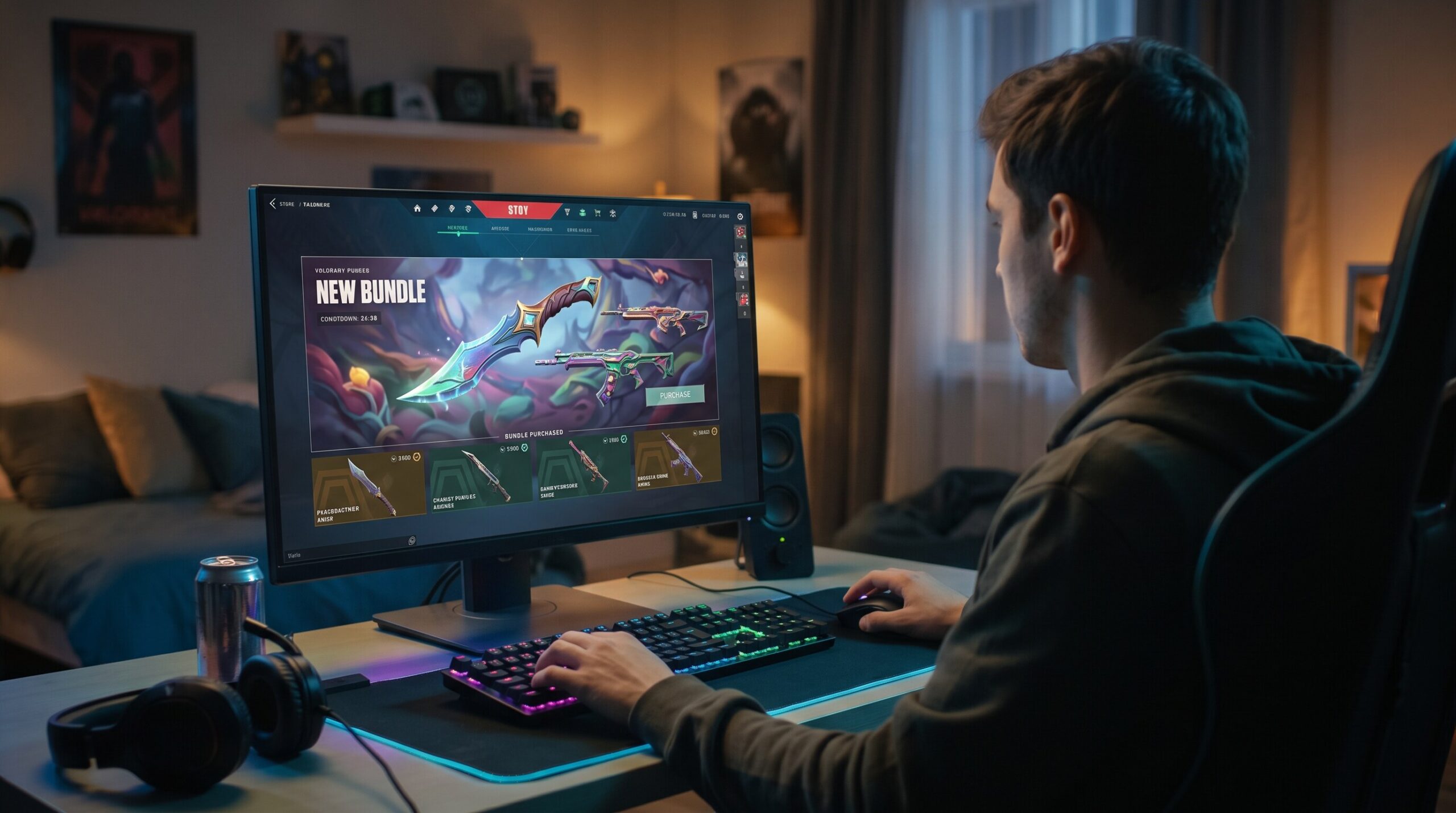




Picture a Valorant player on a quiet Tuesday night, queue wrapped up, scrolling the store before logging off. A new bundle has dropped – maybe a flashy Elderflame revival or a sleek Prime variant – and the little animated preview spins the knife in a slow, hypnotic loop. The decision isn’t really about whether the skin improves aim. It won’t. It’s about the spark of excitement, the anticipation of unlocking something shiny, the small thrill that the Valorant Points economy is engineered to deliver again and again.
That spark is the whole point, and it’s bigger than any single game. The pull of unlocking something new, the buzz of a reveal, the way a store countdown makes a purchase feel urgent – these are the same emotional levers that power a huge swath of online gaming entertainment. The same curiosity that draws players to loot reveals also feeds the growing world of real money casinos, where US players in 2026 increasingly compare sites by how they handle licensing, secure banking, fair certified games, and sensible responsible-play tools. Reviews that rank safe options exist precisely because that excitement deserves a trustworthy home, and knowing how to verify a site’s legitimacy before playing matters just as much there as knowing which Valorant bundle is actually worth the Points.
The Math Behind Valorant Points
Valorant Points don’t map cleanly to dollars, and that’s by design. Players buy VP in bundles that rarely line up with the price of the item they actually want, which means there’s almost always a little leftover balance nudging them toward one more purchase. A premium skin line can run thousands of VP, with upgrade levels, variants, and finishers stacking on top. The Night Market rotates personalized discounts into view, dangling familiar skins at a markdown that feels like a limited window.
None of this is accidental. The currency abstraction softens the sting of spending, and the rotating availability creates scarcity. It’s the same reason a CS2 player eyeing a Case Hardened on the marketplace feels a jolt when the float value lands just right. The item is cosmetic, but the pursuit feels genuine.
Why the Reveal Hits So Hard
The strongest version of this excitement shows up when outcomes are uncertain. Opening a CS2 case, watching the carousel of possible skins blur past before it slows on a result, taps into something deep in the brain’s reward circuitry. Researchers have taken this seriously enough that studies describe how loot boxes resemble gambling, pointing to the same anticipation-and-payoff loop that keeps people chasing the next spin.
Valorant sidesteps pure randomness in its core store – you buy the skin you see – but the broader ecosystem still leans on variable reward psychology through gun buddies, battle pass tiers, and the slot-machine feel of the Night Market reveal. The emotional architecture is shared across genres. Apex Legends players know it too, from Apex Packs to the controversial pricing of heirloom shards. The thrill isn’t in the item sitting in an inventory the next morning. It’s in that suspended second before the outcome resolves.
The Spender’s Profile
Not everyone engages with these systems the same way. Some players never touch the store and happily grind with default skins; others build collections that rival a tournament team’s banner wall. Understanding who spends and why has become a serious field of study. A broad review of who buys loot boxes found patterns around engagement intensity, time invested, and the emotional role these purchases play in a player’s relationship with a game.
For the Valorant crowd, that profile often overlaps with the most dedicated fans – the ones who watch Champions, follow roster moves, and treat their inventory as part of their identity in-game. A flashy Reaver Vandal becomes a small statement on the loadout screen, visible to teammates and enemies alike. The purchase buys a sliver of self-expression, and that’s a powerful motivator that pure gameplay stats can’t fully capture.
Designed to Keep You Coming Back
Developers are open secrets when it comes to monetization craft. Store layouts, countdown timers, bundle discounts, and currency bundles are all tuned to maximize engagement without tipping into frustration. Academic work on the psychology of motivation and manipulation in in-game purchases breaks down how these techniques borrow from behavioral science to nudge decisions in subtle ways.
That doesn’t make Valorant’s economy sinister – plenty of players spend happily and feel they got their money’s worth. But recognizing the design is what separates an informed buyer from an impulsive one. A player who understands why a Night Market feels so tempting can enjoy the thrill while keeping the wallet in check. The same awareness translates directly to any form of online entertainment built around excitement and chance.
Enjoying the Thrill on Your Own Terms
The healthiest way to engage with loot excitement, whether it’s a Valorant bundle or any other reveal-driven entertainment, is to treat the fun as the product itself. Set a budget before the store even opens. Decide which skins actually matter and let the rest rotate past. Appreciate the animation, the sound design, the little dopamine flicker – then log off satisfied rather than chasing one more unlock.
That mindset keeps the excitement where it belongs: a highlight of the hobby rather than a source of regret. Valorant Points, CS2 cases, and Apex Packs all sell the same core feeling, and that feeling is genuinely enjoyable when approached with clear eyes. The reveal will always be fun. Knowing exactly why it’s fun, and setting limits accordingly, is what lets a player keep loving it season after season.