




Counter-Strike 2 viewership has always been tied to tournament schedules, but there’s a large stretch of downtime between Major events, qualifiers, and weekly league matches. During those gaps, the audience doesn’t simply disappear. Millions of fans who tune into IEM, BLAST, or ESL broadcasts spend a surprising amount of time watching content that has nothing to do with a live scoreboard, and everything to do with the culture surrounding the game.
This shift says a lot about how esports fandom has evolved. Watching isn’t confined to official matches anymore; it spreads across streamers, skin markets, community drama, and side entertainment tied loosely to the CS2 economy. Understanding where that attention actually goes gives a clearer picture of what keeps the CS2 audience engaged year-round, even when no trophy is on the line.
Streamers Who Turn Practice Into Entertainment
A large portion of daily CS2 viewing happens on individual streamers rather than official broadcasts. Players like s1mple, ohnePixel, or various former pros run channels where they queue into ranked matches, review their own gameplay, or react to community clips. For viewers who want a break from watching gameplay entirely, it’s worth taking a look at the CS2 Plinko segments many of these same streamers run between matches, a skin-based take on the classic Plinko board that fits naturally alongside case openings and trade talk.
These streams also double as a training resource for viewers trying to improve their own aim or positioning. Watching a professional explain their decision-making in real time, rather than just seeing the final result of a match, teaches viewers things a tournament broadcast never covers. Commentary during a scrim tends to be more relaxed and detailed than anything a caster would say during a Major.
Beyond gameplay, many of these streamers build entire secondary audiences around case openings, trade discussions, or reacting to patch notes. That content often draws in viewers who don’t play CS2 competitively at all but follow the game as a form of ongoing entertainment, similar to following a sports personality outside of game day.
Skin Culture And The Economy Around Cosmetics
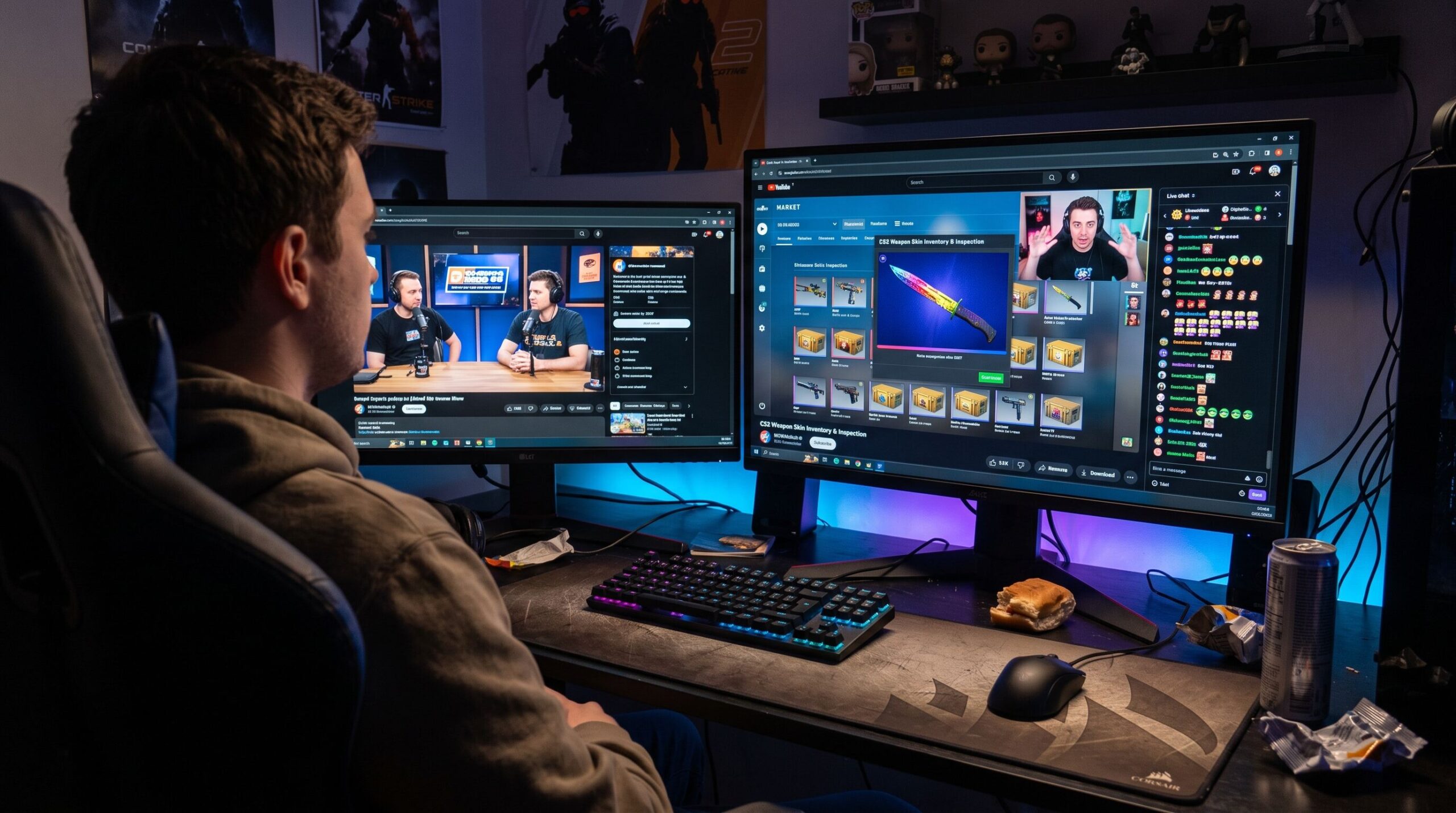
CS2’s weapon skin market has grown into its own spectator activity. Videos and streams dedicated to opening cases, trading skins, or valuing rare items regularly pull large audiences, separate from anything happening in ranked or competitive play. Skins carry real monetary value on secondary markets, and watching someone unbox a rare knife or AWP skin has become a genre of content in its own right.
This has created a parallel economy of creators who focus purely on trading strategy, market trends, and skin investment advice. Their content resembles financial commentary more than gaming content, breaking down price fluctuations the way someone might discuss stock movements. Viewers who never touch a competitive server can still find this genuinely interesting because it’s tied to real money changing hands.
Gambling-adjacent content sits close to this space as well. Sites built around CS2 skins have introduced games that borrow the visual language of casino mechanics while staying tied to the game’s cosmetic economy, giving fans a lighter, faster-paced alternative to watching a full case-opening video unfold.
Community Drama And Behind The Scenes Stories
Esports fandom has always had a soap opera element, and CS2 is no exception. Roster changes, contract disputes, and public disagreements between players or organizations generate as much viewership as actual matches at times. Content creators who specialize in breaking down team drama or explaining why a player left a squad often see spikes in views that rival tournament broadcasts.
Podcasts and interview shows have also carved out a steady niche. Hosts sit down with current or former pros to discuss their careers, mental health struggles, or opinions on the scene’s direction, giving fans a version of the game’s personalities that broadcast overlays never show. These conversations humanize players in a way that a highlight reel simply can’t.
Retrospective content adds another layer to this. Long-form videos revisiting iconic rounds, legendary rivalries, or the transition from CS:GO to CS2 attract viewers who want context rather than live action. This kind of storytelling helps newer fans understand why certain teams or players carry the weight they do in community conversations.
Highlight Reels And Analytical Breakdowns
Full matches take hours, but not every fan has time to watch a best-of-three. This has fueled demand for highlight compilations that condense the most exciting rounds, clutches, and aces into short, digestible clips. These videos circulate widely on social platforms, often reaching people who never watch a full broadcast but still stay informed about who’s performing well.
Analytical content fills a different need. Channels dedicated to breaking down team strategy, economy management, or utility usage attract a more dedicated subset of fans who want to understand the game at a deeper level. These breakdowns often use footage from recent matches but reframe it entirely, focusing on decision-making patterns rather than the outcome of any single round.
Fantasy leagues and prediction-based content have also grown alongside this analytical wave. Fans who track team statistics for their own predictions or fantasy rosters consume data-heavy content that overlaps with sports analytics culture, treating CS2 results the way a football fan might treat weekly standings.
What This Says About Modern Esports Fandom
The time between CS2 matches has become just as culturally rich as the matches themselves, filled with streamers, skin markets, community storytelling, and analysis that keep fans engaged around the clock. This spread of attention shows that esports fandom today functions more like a full media ecosystem than a simple broadcast schedule, and CS2’s audience has built an entire secondary world of content that keeps them invested long after the last round ends.
