




Buying a game no longer describes one clear transaction. Access now comes in separate forms: a personal digital license, a subscription catalog, a limited trial, or currency that works inside one game. Each option grants a different right, so treating them as interchangeable versions of ownership obscures what is actually being purchased.
That distinction is clear with a Valorant in-game currency card. Riot Valorant Points are game-specific currency for use within VALORANT, not a purchase of the full game or transferable ownership of the items obtained through it. A gaming budget can therefore cover permission to access software alongside purchases that function only within a particular game ecosystem.
The Buy-Once Model Now Covers Several Different Rights
Digital storefront terms set the boundary between a license and a physical object. Steam states that its Content and Services are licensed, not sold, for personal use through a Steam account. PlayStation also says that digital-content purchases provide a personal, non-transferable license rather than ownership of the content or its intellectual property.
That license can still provide useful access to a purchased game, but it is not a transferable physical copy. Account status, platform rules, software support, and authentication requirements can shape continued access. This does not turn every digital purchase into a rental; it means the buyer receives permission under defined terms.
Subscriptions sit in a separate category. PlayStation Plus can include monthly games, a Game Catalog, a Classics Catalog, trials, and cloud streaming, based on membership tier. It can reduce the commitment needed to sample a title, while access remains conditional because catalog titles can leave and membership-linked access ends when the membership expires.
Trials have their own purpose as well. PlayStation describes them as limited-time access to selected titles before purchase, rather than a permanent license or an ongoing catalog entitlement. The practical change is simple: players now need to identify the type of access they want before deciding what represents value.
Purchase Details Matter More Across Connected Ecosystems
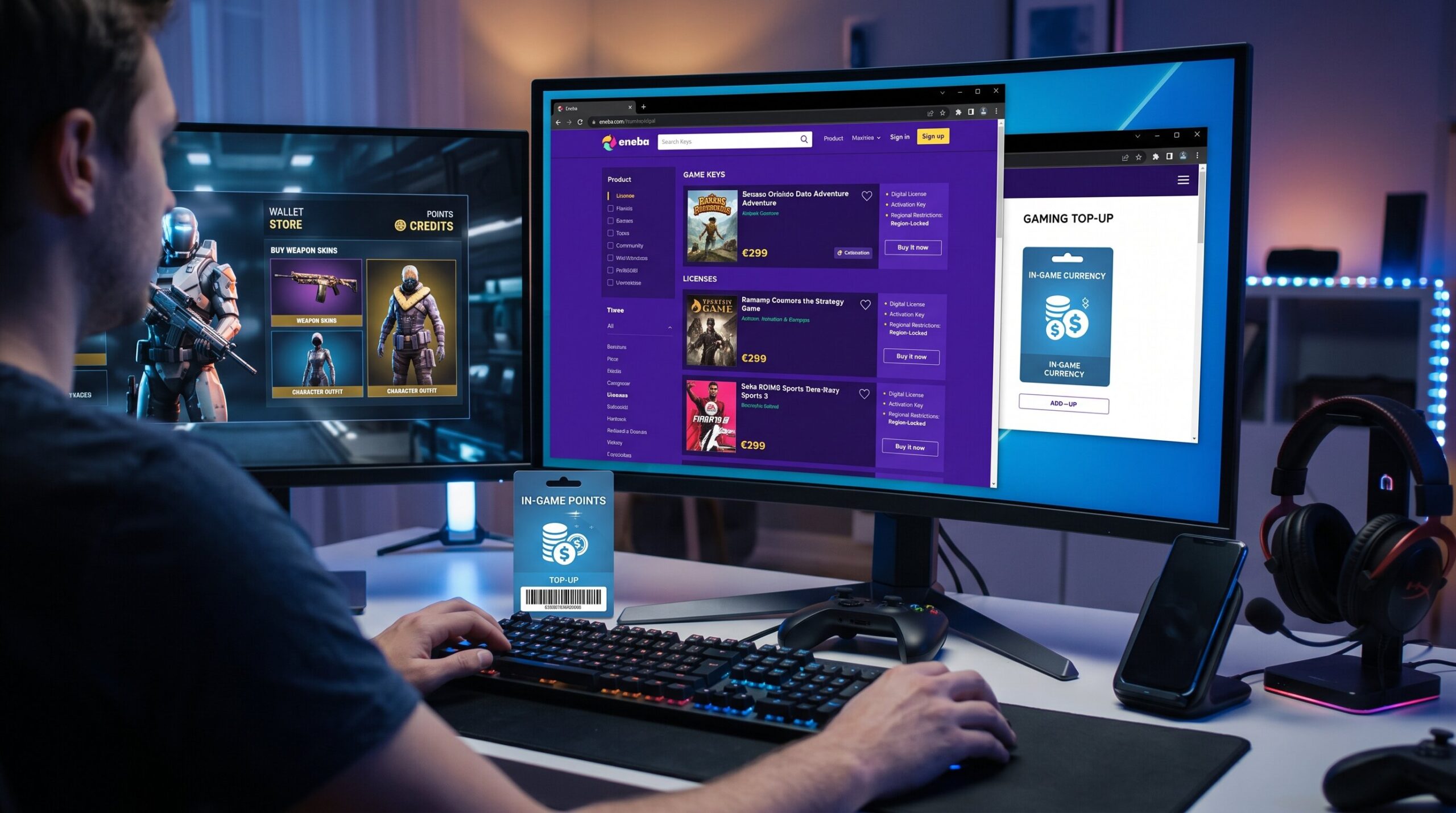
Game keys are legal when they come from legitimate sources and buyers confirm the platform, region, and listing details before purchase. Eneba is a digital marketplace with verified merchants, while product pages can show platform information and regional compatibility. Those details help a buyer choose a key that fits the intended account and platform.
This attention to access details reflects the way play can span connected ecosystems. ESA data reports that 51% of players use multiple devices for games, while 31% play exclusively on mobile. Accounts, platforms, and device ecosystems are therefore part of the purchase decision, alongside the game itself.
Virtual currency requires the same precise reading of what is being acquired. PlayStation classifies in-game currency, goods, and assets as licensed virtual content rather than property, and restricts their use to the relevant software. Riot Valorant Points can support purchases inside VALORANT, but they do not provide ownership of VALORANT or a transferable claim to virtual items.
The result is a more informed approach to game spending. A full-game license, a subscription catalog, a trial, and a top-up can each serve a valid purpose, yet they should not be judged by the same ownership standard. Digital marketplaces like Eneba offer deals on games, gaming top-up, and more, while clear platform and region information helps match each purchase to its intended role.