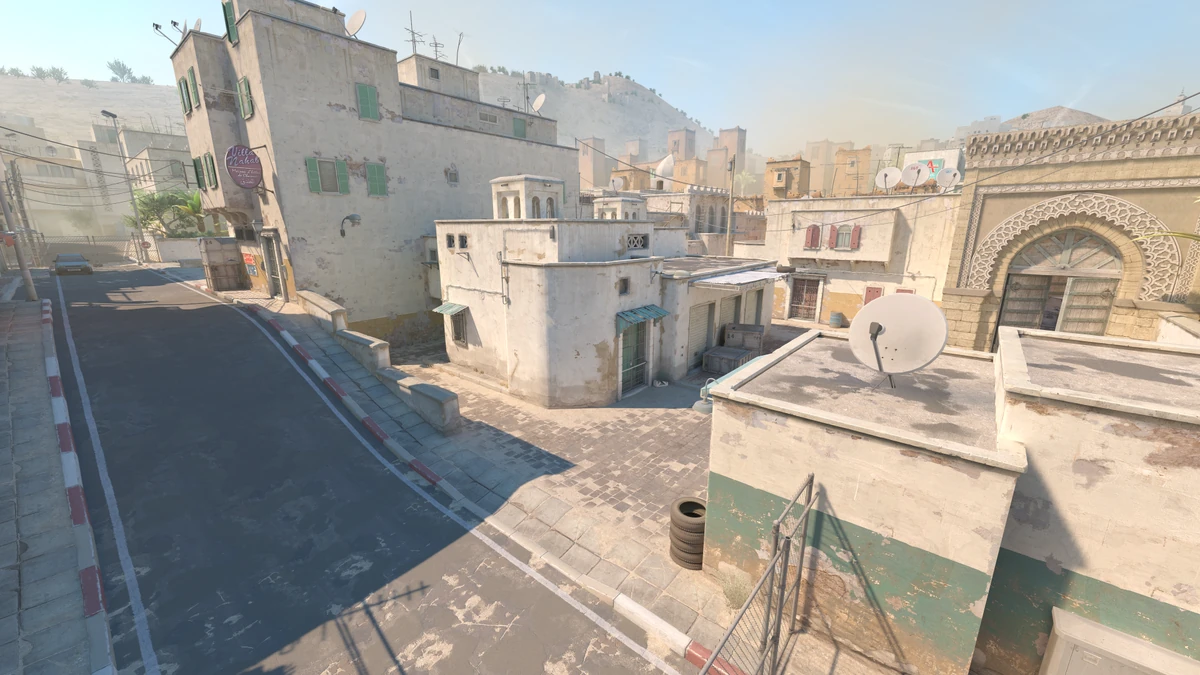




David Johnston originally designed the most famous battleground in the Counter-Strike franchise, leaving a legacy that continues to dominate the competitive scene today – Dust 2. Valve recently provided major visual and gameplay adjustments for CS2, breathing new life into the environment while keeping the primary layout largely intact. Our team constantly reviews these modern lighting updates, particularly how the brighter textures in darker areas completely change player visibility.
Following the overwhelming success of the original release, its creator initially planned to skip a number and name the sequel Dust3. Johnston believed that the 3rd installment of any movie trilogy typically failed to match the original, hoping the community would simply accept the unconventional naming scheme without asking questions.
Jess Cliffe, the co-creator of the Half-Life mod alongside Minh Le, eventually stepped in to advise Johnston to rethink his decision before the final release. The name was officially changed to its current iteration shortly after, securing its permanent place in competitive gaming history.
You can explore the full history of the map here:
The Dust 2 road to the modern engine
The jump from the previous game version into CS2 introduced massive visual upgrades without altering the core competitive geometry of Dust 2. The development team focused heavily on player readability by overhauling the lighting system entirely. Dark corners that previously allowed defenders to hide in the shadows are now completely flooded with natural light.
To help players understand the exact transition, we compiled a list of the most impactful adjustments:
- Volumetric smoke grenades now dynamically fill choke points like the middle doors.
- The lower tunnels feature a torn roof that pours sunlight into previously pitch-black hiding spots.
- Frustrating physics-based trash props were replaced with static details like weeds and rocks for predictable movement.
- The layout officially returned to the Active Duty Map Pool in April 2024, replacing Overpass for tournament play.
These quality-of-life adjustments drastically shift how teams approach their default strategies of Dust 2. Defenders can no longer rely on poor visibility to secure easy eliminations around the B bombsite. You can explore the complete technical breakdown regarding these Source 2 upgrades in the official release notes.
Crucial Dust 2 battlegrounds
Long stands out as a legendary fighting area that has maintained its reputation since the early days of the franchise. The physical design lacks any real cover, forcing players into straightforward engagements where the fastest and most accurate shooter usually survives.
Because these Dust 2 duels rely heavily on mechanical skill over complex tactical setups, securing control demands absolute precision from both attackers and defenders. The transition to the Source 2 engine has made these long-range fights significantly clearer, removing the old shadows that previously concealed players holding passive angles.
Anyone looking to dominate this specific lane must prioritize raw crosshair placement over everything else. We notice that the squad maintaining consistent control over this area frequently dictates the pace of the entire match, making it a critical zone for any serious competitor. You can review the modern spawn timings and layout details on the updated map overview.
Legendary competitive Dust 2 moments
The Swedish fnatic roster remains one of the most dominant organizations in competitive history, setting the standard for success over several generations of the game. Their grand final appearance at the ESL One Cologne 2015 Major Championships against Team EnVyUs gave us a completely unprecedented tactical approach that manipulated the spawn geometry perfectly.
When the match entered overtime, the heavily stacked fnatic squad made a massive economic gamble by purchasing 4 AWPs for one round. Every player positioned themselves at the T-spawn ledge, aiming directly down toward the middle doors to catch an early aggressive push from the French side. Dan “apEX” Madesclaire attempted to gather information by crossing the gap, only to be instantly met by 4 high-powered sniper rifles locked onto his position.
During our on-site coverage of the IEM Cologne Major in June 2026, the Dust 2 sandy corridors hosted another unforgettable spectacle that highlighted the brutal nature of this terrain. Team Spirit completely dismantled Natus Vincere with a 13 to 1 victory, proving that establishing immediate control over middle and short completely suffocates any defensive setup before it can form.
Dust 2 callouts and utility
Learning the proper terminology for every location remains a fundamental requirement for effective team communication in any competitive match. We constantly stress the importance of knowing exactly what to call a spot when an enemy suddenly appears on your screen.
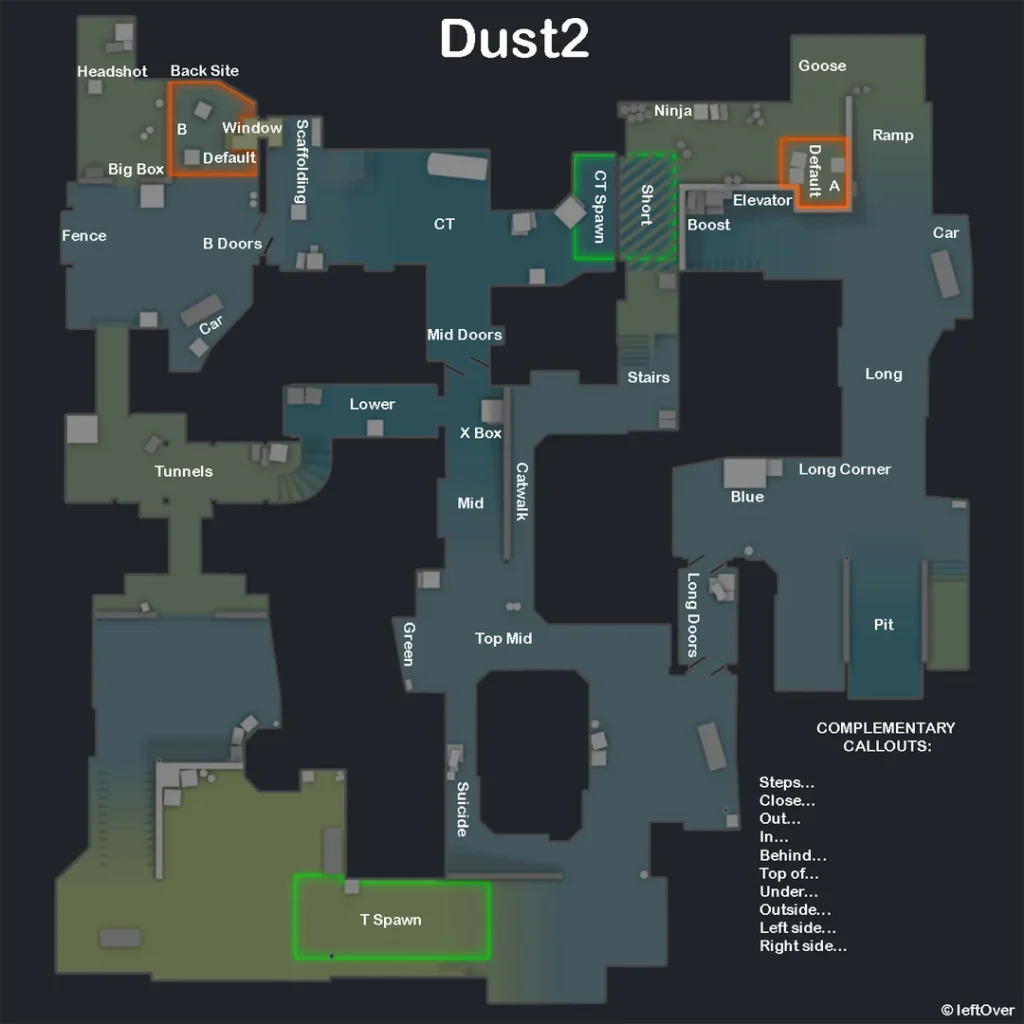
Throwing the correct smoke grenades and flashbangs requires a deep understanding of these specific area names to coordinate with your teammates. A perfectly timed flash over the middle doors can completely blind an opposing sniper, allowing your team to secure crucial map control.
Players wanting to gain a competitive advantage should spend time practicing their utility lineups in an offline server before jumping into a ranked match. Mastering these tactical throws will easily elevate your overall performance and win rate during this current CS2 season on Dust 2.
