



CS2 callouts are one of those things every new player underestimates until a round falls apart because nobody can explain where the danger is.
You can have decent aim. You can know a few flashes. You can even win your duels. But if your comms are just “on me” or “over there,” you are still making the game harder than it needs to be.
Counter-Strike has always been a game of information. The team that shares better info, faster, usually gives itself a better chance to win the round. That is where callouts come in.
Good CS2 callouts turn panic into usable information.
That is the whole point. You are not trying to sound clever or tactical. You are trying to give your teammate something they can react to immediately.
Why CS2 callouts matter so much
Every CS2 round is full of uncertainty. You rarely know exactly where every enemy is, and even one second of hesitation can be the difference between a clean hold and a lost site.
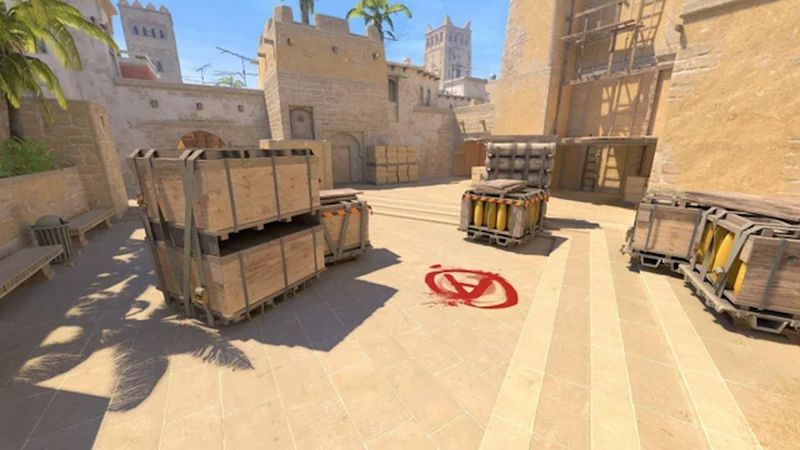
That is why CS2 callouts matter so much. They give your team a shared language for positions, pressure points, and rotations. Instead of a vague warning, you give a location that actually means something. In addition, proper CS2 callouts also mean being on top of the latest map changes and updates.
Think about the difference.
- A bad callout sounds like this: “He’s by the box.”
- A useful callout sounds like this: “One top mid.”
The first one forces your teammate to guess. The second one gives them a direction, a likely angle, and a faster decision. That is what strong communication looks like in CS2. It is not louder, it is clearer.
What makes a good CS2 callout
A lot of beginners think better communication means saying more. Usually, it is the opposite.
The best callouts are short because they have to survive the speed of the round. They tell your team where the enemy is, how many there are, or what route they are taking. Nothing extra, nothing vague.
Here is a simple example of how much cleaner a round sounds when the callout is precise:
| Situation | Better callout | Why it works |
|---|---|---|
| You spot one enemy | “One ramp” | Clear location, no wasted words |
| You spot multiple | “Two out B” | Gives number and pressure point |
| Enemy is moving | “One rotating CT” | Tells your team the route |
| Enemy is close | “Close right” | Helps the teammate clear instantly |
| You are unsure | “Could be apps” | Honest, but still useful |
The best CS2 callouts are the ones your teammate understands before you finish the sentence. It shouldn’t matter if you are playing Anubis or Dust 2, certain callouts can transcend maps.
That is a good rule to keep in mind when you are learning.
The easiest CS2 callouts to learn first
One reason callouts feel overwhelming at first is because new players often try to learn every single label on a map all at once. That usually turns into memorization for the sake of memorization, and most of it disappears the moment the match gets hectic.
A better way to learn is to focus on the names that come up constantly. Almost every map has the same core structure: Bombsites, mid, entry lanes, and rotation paths. If you know the names of those areas, you already have enough to contribute.
That is why the most beginner-friendly CS2 callouts are usually the obvious ones. A site, B site, mid, long, short, connector, CT, and apps are not flashy callouts, but they show up over and over again. These are the words that keep rounds organized.
Once those names become natural, the rest of the map stops feeling like random scenery and starts feeling readable.
CS2 callouts map by map: The beginner version
You do not need a full map dictionary to be useful. You need the names that actually show up in real matches. Even the best CS2 players are not constantly using niche terms and callouts, but rely on the frequent and known callouts. So, why should you complicate it?
Mirage CS2 callouts
Mirage is one of the easiest maps to start with because the layout is intuitive and the key positions get mentioned almost every round. The most important names for beginners are A ramp, palace, jungle, connector, window, top mid, underpass, cat, apps, and market.
Once you know those, Mirage comms become much easier to follow. “AWP window” instantly tells you where the threat is. “Two cat” tells you both the route and the pressure building toward A. “One palace” can change how a defender holds the site.
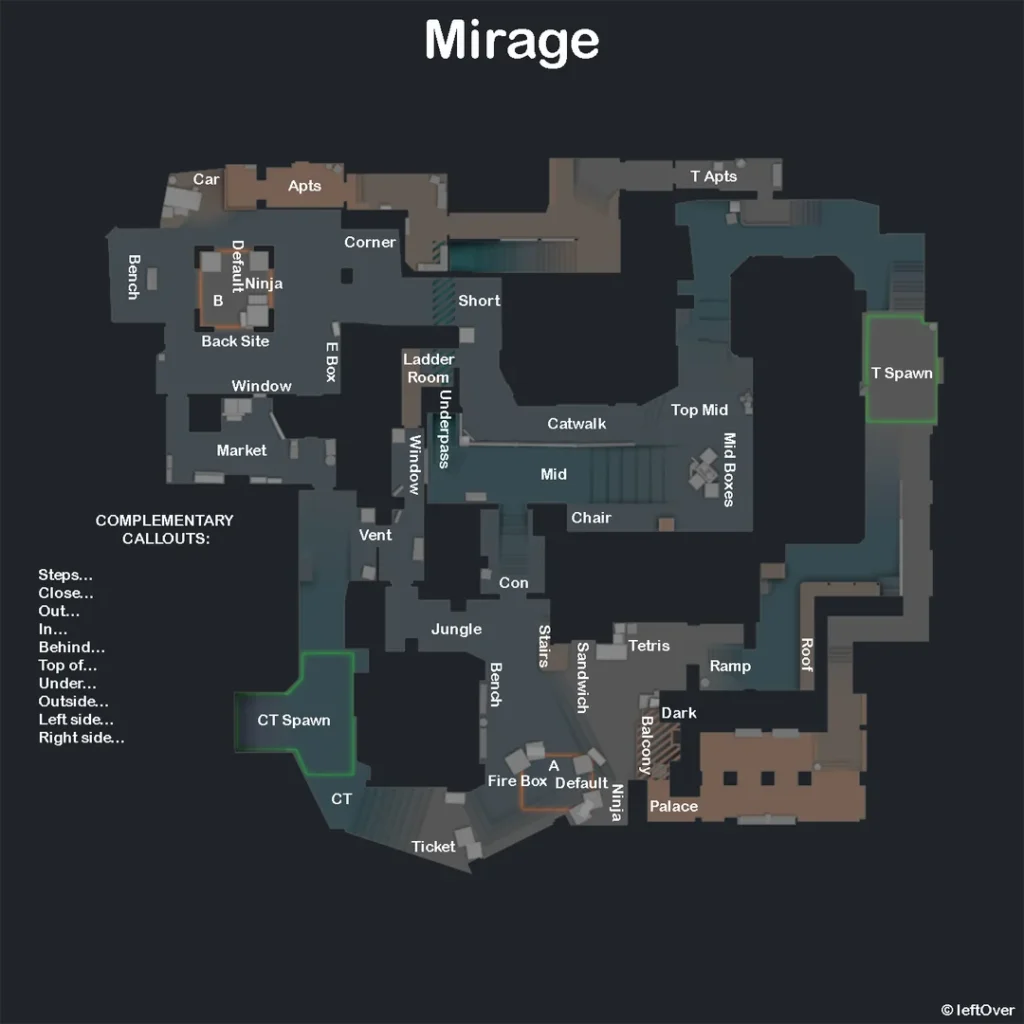
Credit: Reddit
That is what makes Mirage such a strong learning map. The callouts are not just labels, they describe the map’s rhythm.
Inferno CS2 callouts
Inferno is a map where a few callouts do a huge amount of work. Beginners should get comfortable with banana, car, coffins, dark, apps, boiler, arch, library, pit, and graveyard first, because those are the areas that keep shaping rounds on both bombsites.
If someone says “one close banana,” you already know where the fight is happening and what kind of pressure is coming. If you hear “AWP arch,” that tells you far more than just where one player is standing. It also hints at how hard the A side of the map may be to cross.
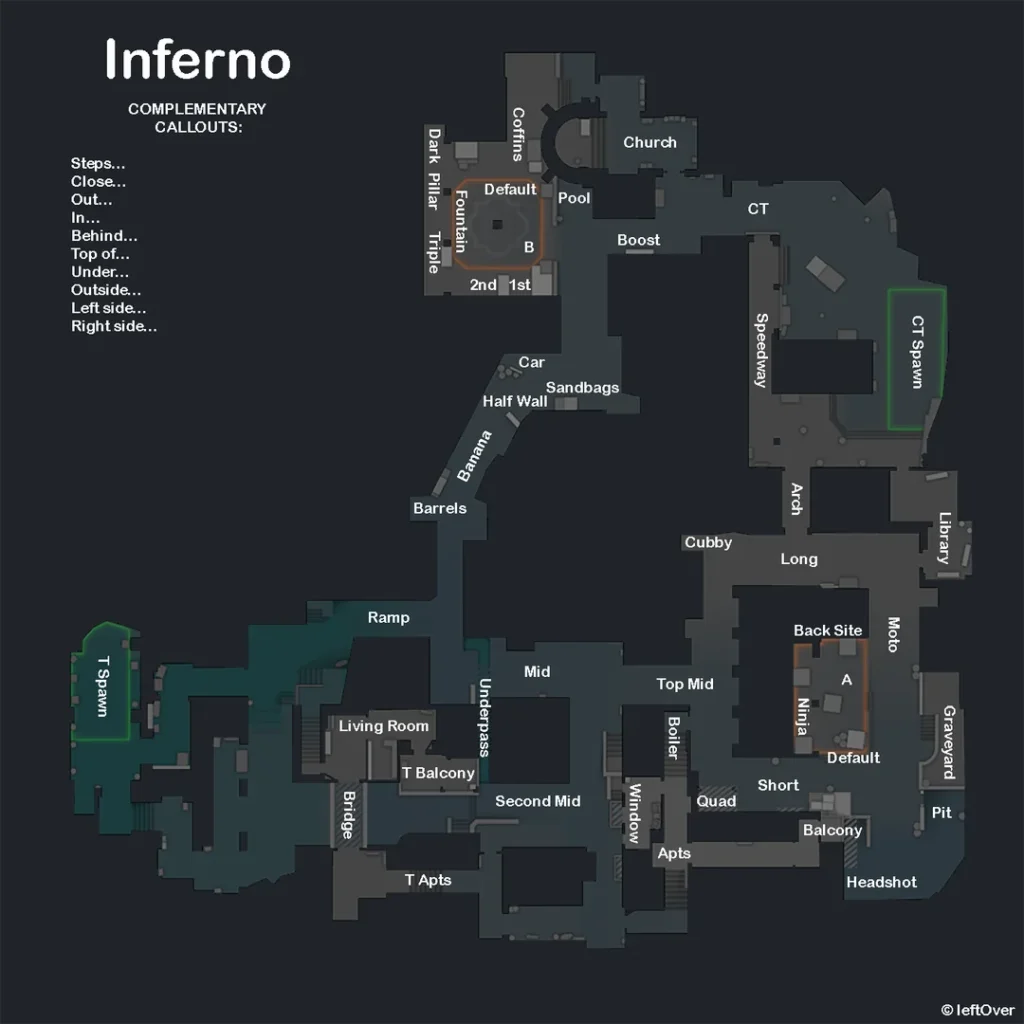
Inferno rewards clear comms because the map is full of tight chokes and utility-heavy fights. If your team’s info is messy, the map gets messy fast.
Dust2 CS2 callouts
Dust2 remains one of the cleanest maps for learning how callouts work because the core names are simple and easy to visualize. The big ones are long, pit, short, cat, Xbox, mid doors, lower tunnels, upper tunnels, and B doors.
That simplicity is part of why the map works so well for beginners. When a teammate says “one crossed long” or “steps cat,” the picture is immediate. You do not need to decode anything.
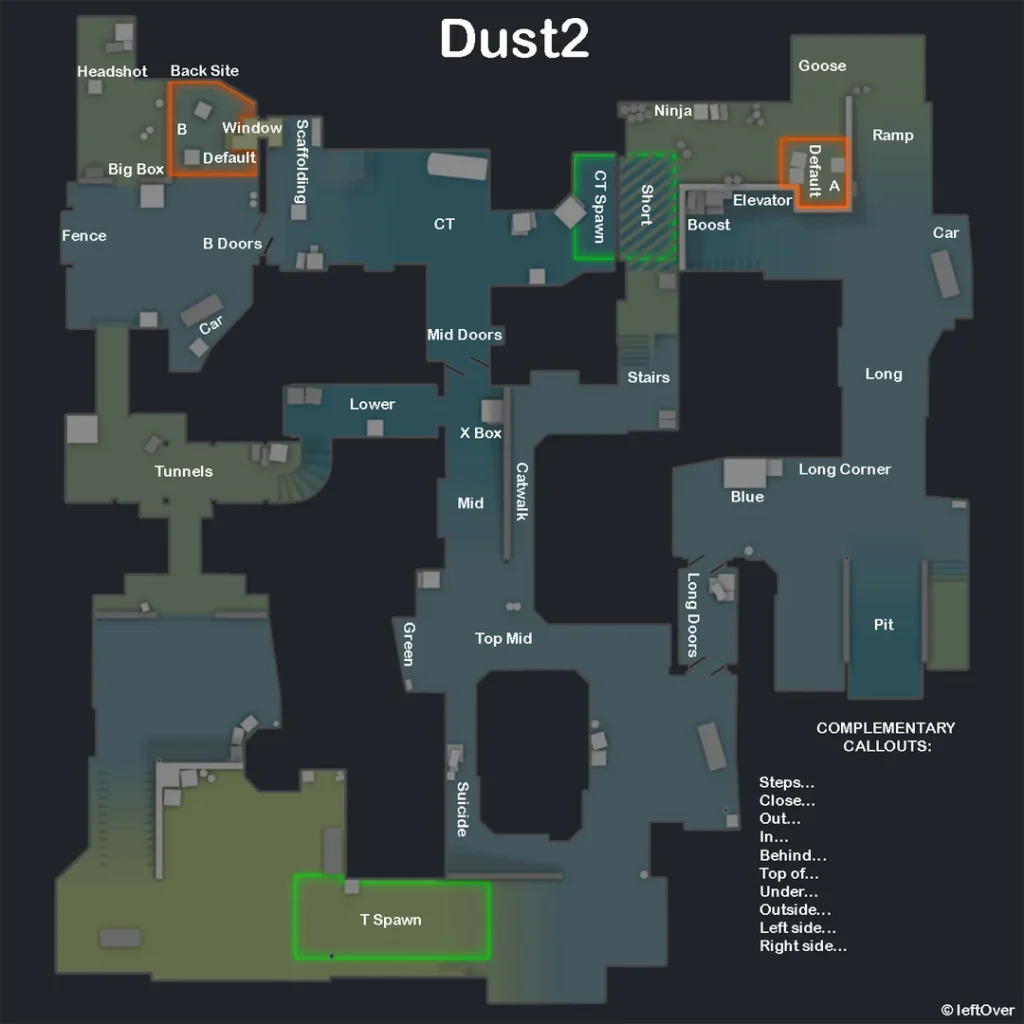
Dust2 is good practice because it teaches the basic habit every strong player needs: hear the callout, picture the position, react. The faster that link becomes in your head, the better your communication becomes on every other map too.
Nuke CS2 callouts
Nuke feels harder at first because it is more vertical than the other maps. That is why beginners should ignore the smaller details early and focus on the big structural callouts first: lobby, hut, squeaky, ramp, heaven, hell, and secret.
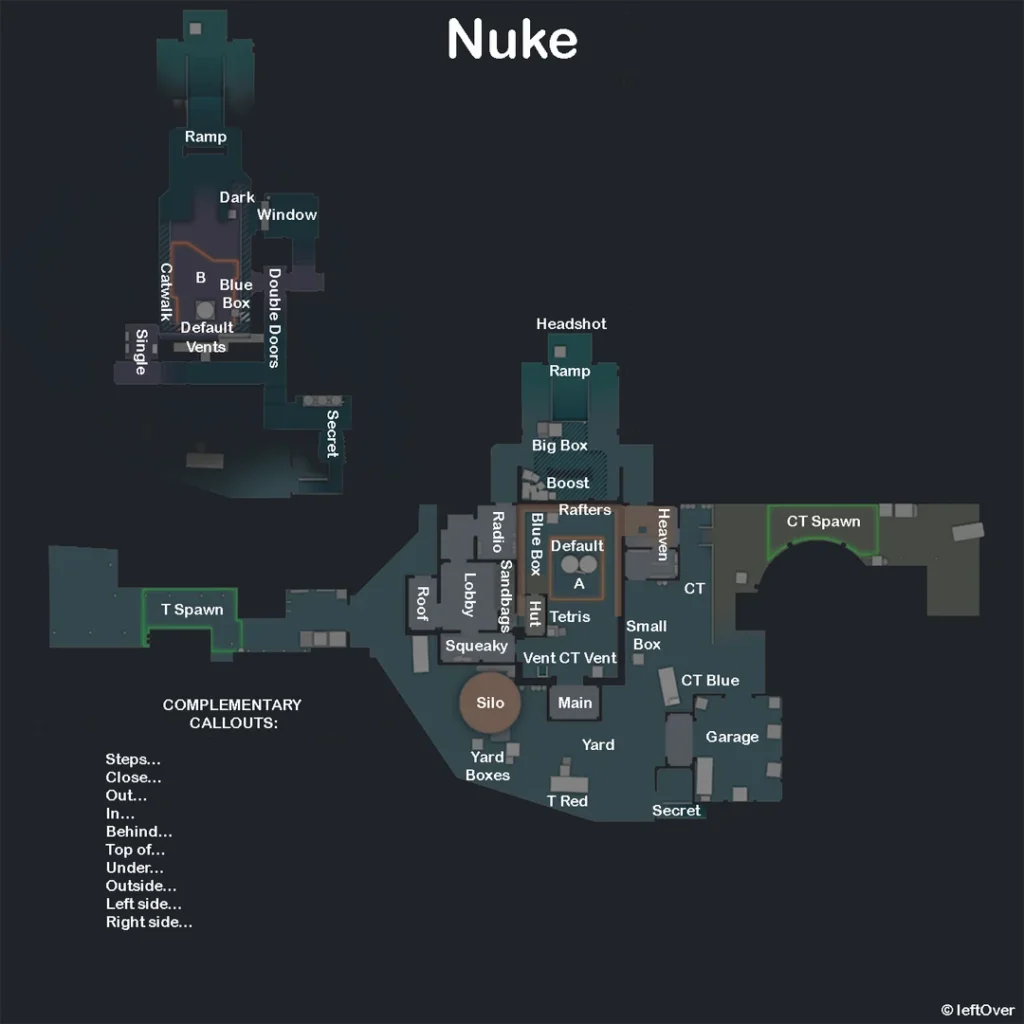
Once those are familiar, Nuke becomes much less intimidating. “One secret” tells you a rotation route. “Two ramp” can completely change how the CT side splits its defense. “One heaven” instantly affects how players approach the upper site. On Nuke, the best beginner comms are usually the ones that explain elevation and route as quickly as possible.
Ancient CS2 callouts
Ancient can feel awkward when you are new because some of the names are less intuitive than on older maps, but the key beginner callouts are still manageable. Start with mid, donut, cave, temple, lane, and A main.
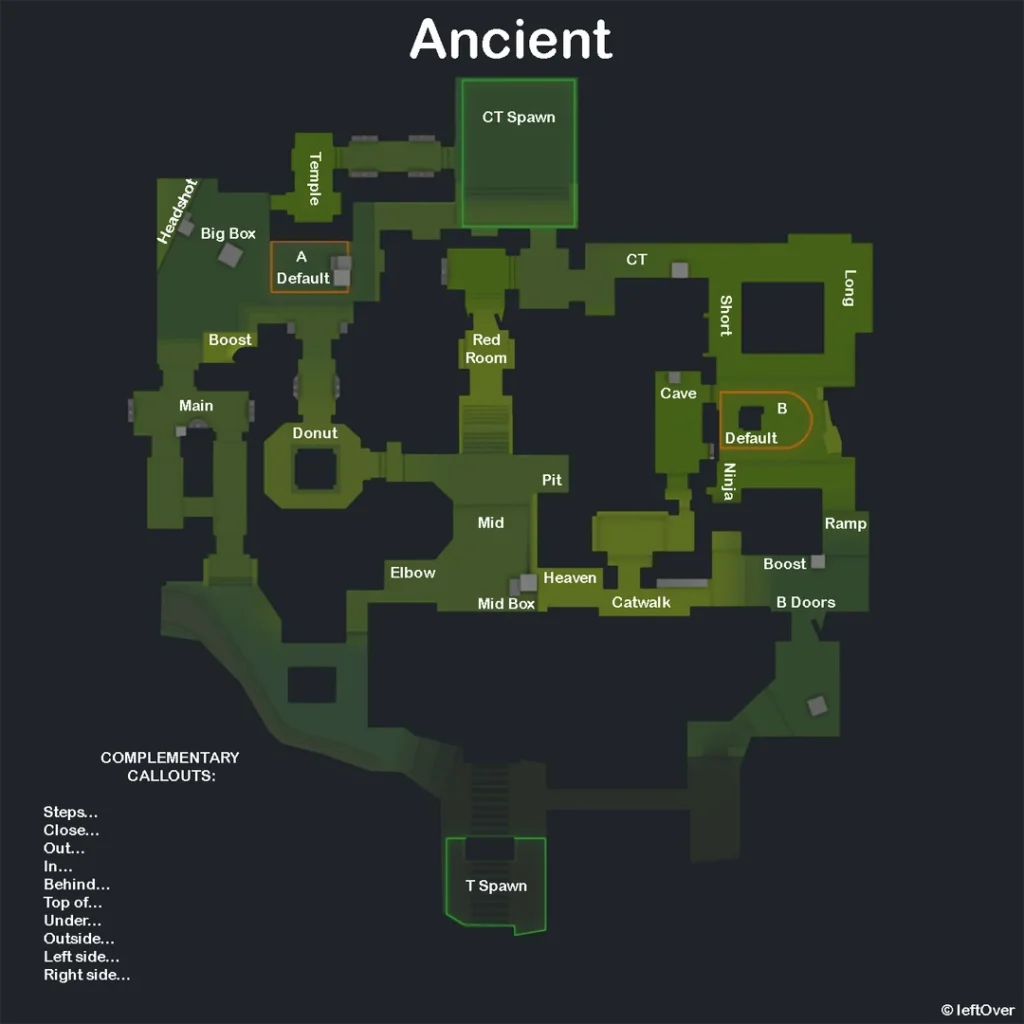
These are the names that hold the map together. “One donut” helps A defenders understand where pressure may split from. “Out cave” is one of the most common warnings on B. “Temple” matters constantly in retakes and post-plants around A. Once those core names click, Ancient becomes much easier to read.
Overpass CS2 callouts
Overpass is back in the competitive pool, and it is a map where route names matter a lot because teams can pressure sites from several directions. Beginners should start with monster, short, connector, toilets, long, and heaven.
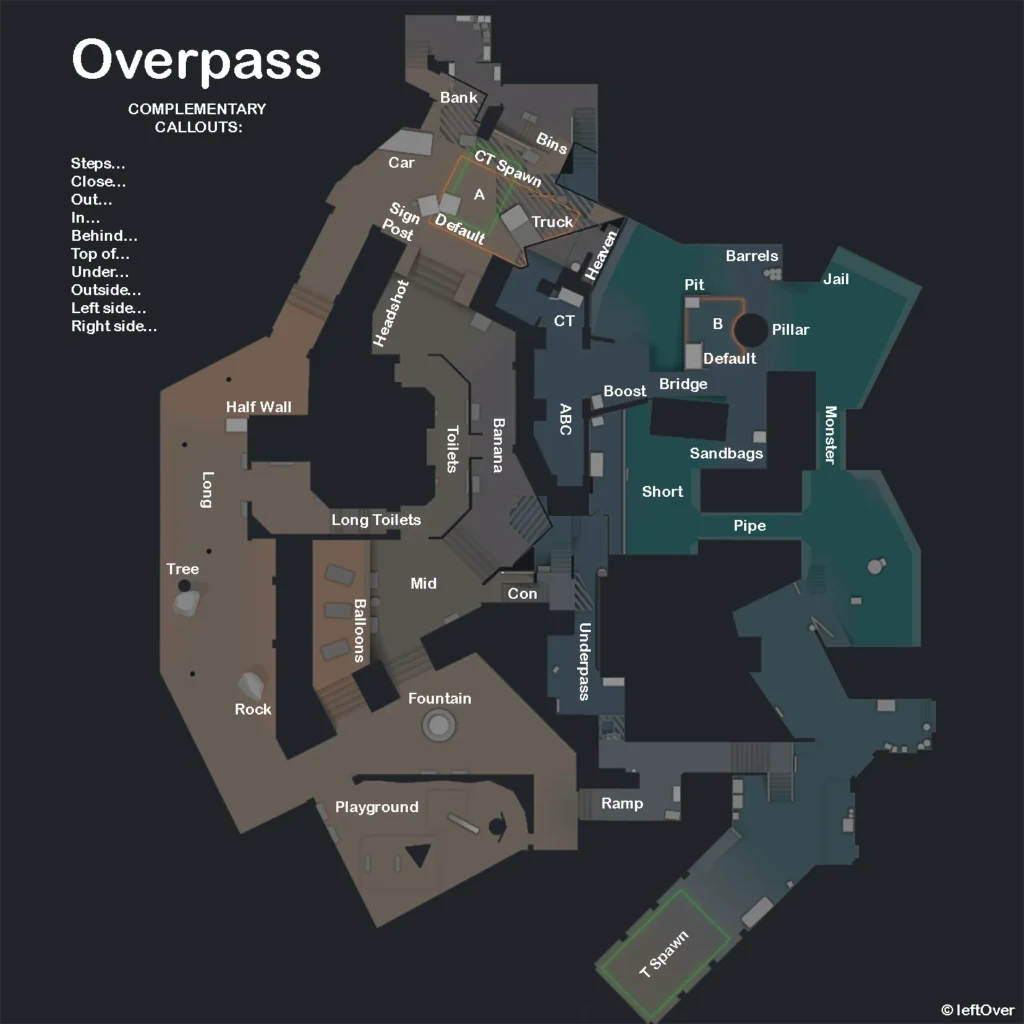
These callouts matter because Overpass is all about map control and layered site hits. “One monster” is very different from “one short,” even if both threaten B. “Toilets” and “long” shape how A control is played, while “connector” often tells teammates where rotations or lurks can appear. On this map, good callouts help your team understand not just where the enemy is, but what kind of hit may be coming.
Anubis CS2 callouts
Anubis is back in the pool for Premier Season Four, so it makes sense for beginners to learn the core names now instead of treating it like a side map. The most useful early callouts are mid, canal, connector, heaven, temple, and the site entrances.
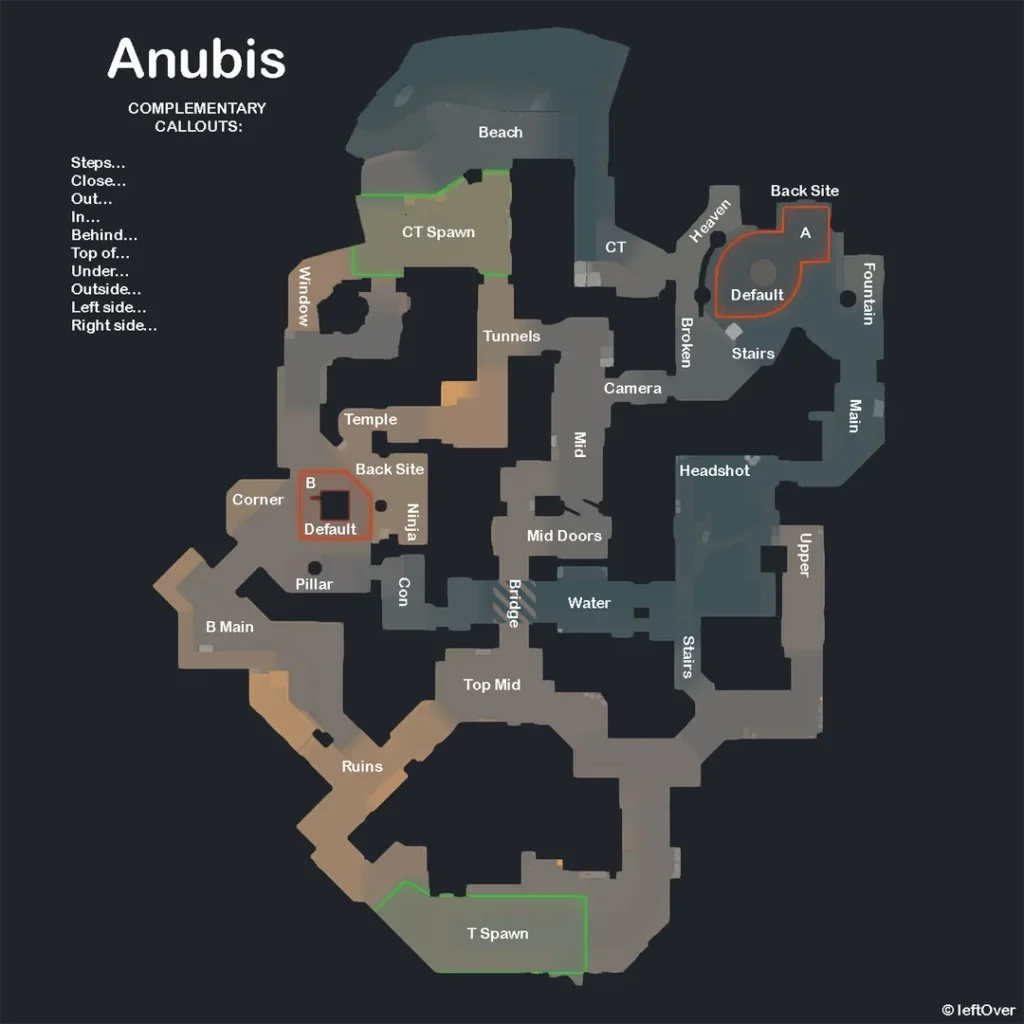
What makes Anubis tricky for newer players is that the routes can feel less familiar than on classic maps like Dust2 or Mirage. That is why the best approach is to keep it simple. Learn how mid connects the map, learn the major A and B entry points, and learn the common elevated post-plant spots like heaven and temple. Once those are in place, the rest of Anubis becomes much less confusing.
How to learn CS2 callouts without frying your brain
The best way to learn callouts is not by staring at a giant image full of map labels and hoping your brain keeps up.
It is much easier to learn them while moving through the map itself. Load into a private server, walk through the common routes, and connect the words to the positions. That way, the callout becomes attached to a real location and not just a term on a guide image.
This matters because CS2 is too fast for slow recall. You do not want to stop and think, “what is this part called again?” You want the name to come naturally because you have seen it, used it, and heard it in context.
A good beginner method is simple. Pick one map, learn the major areas, use them in your next few matches, and then add the smaller positions later. That approach sticks far better than trying to master every map at once.
You do not need perfect CS2 callouts. You need dependable ones.
That is a much more realistic goal, and it is the one that actually helps your team.
Common beginner mistakes with CS2 callouts
Most bad callouts do not come from laziness. They come from stress. This also affects every rank of the game, with higher ranks having lesser instances of it due to the experience alone.
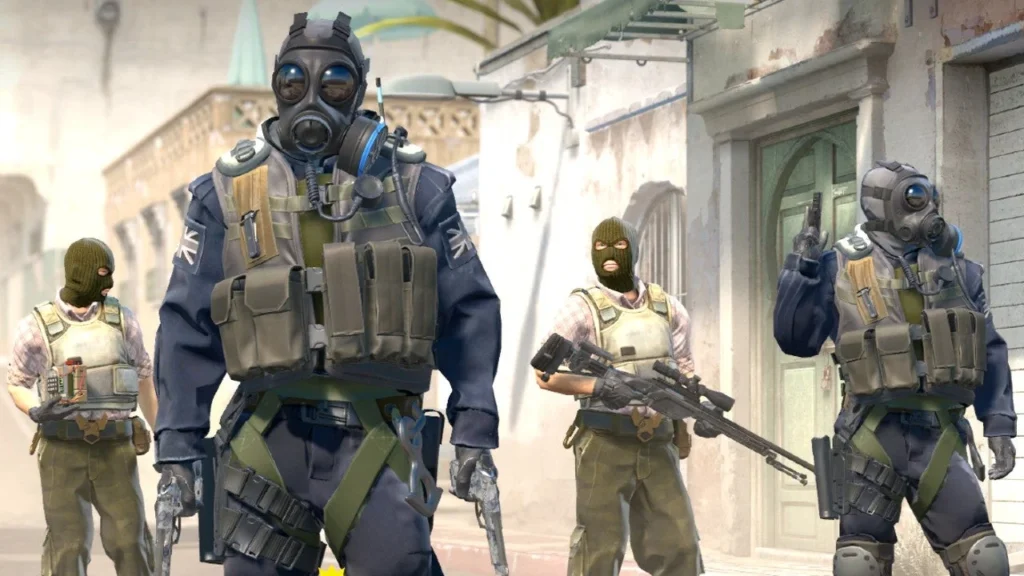
Players panic, rush their words, or say the first thing that comes to mind. That is why “on me” is so common, even though it is only useful if your teammate already knows exactly where you are. It is also why some players talk too much after they die, when one calm sentence would have done more for the round than a full speech.
Another common issue is inconsistency. Some players invent their own names for positions, while others use terms their current teammates may not know. That can happen, especially on maps where different groups have used slightly different names over the years.
The important thing is not to get stuck on perfect terminology. Be clear enough that the rest of the team understands you immediately.
Beginner-friendly CS2 callouts: What to master first
If you want the fastest improvement, focus on the parts of the map that affect nearly every round.
That means entry lanes first, because they tell your team where the pressure is coming from. It means rotation routes next, because those explain how enemies or teammates move between areas. And it means the common anchor spots on sites, because those are the places players hold, clear, and play around during executes and retakes.
That is why names like banana, apps, ramp, long, connector, CT, and heaven matter so much early on. These are not niche details. These are the callouts that hold the map together.
Once those are locked in, the rest starts to come naturally.
