





The PGL Major Singapore 2026 has 32 teams, three Swiss stages and a Bo5 grand final, and almost none of that existed when the first Major was played 13 years ago.
If you last watched a Major when the teams were called Legends and Challengers, the format in Singapore takes some explaining. There are no groups, no Minors and no qualifier with a name of its own. Every team is invited from one ranking, and a team that starts in Stage 1 has to get through three Swiss stages before it even sees the arena.
This is how the Major works now, and how it changed from four groups of four in 2013 to the 25th edition in Singapore.
How the Major works in 2026
All 32 teams at the PGL Major Singapore 2026 were invited through the Valve Regional Standings (VRS) on 2 November: 18 from Europe, nine from the Americas and five from Asia. The best-ranked teams in each region start in Stage 3 or Stage 2, and the rest start in Stage 1.
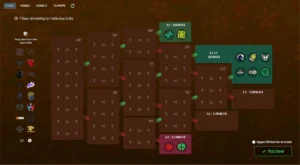
Each stage is a 16-team Swiss group. Teams only meet opponents with the same record. Three wins send a team to the next stage, and three losses send it home.
| Stage | Dates | Teams | Matches |
|---|---|---|---|
| Stage 1 | 24 to 27 November | 16 | Bo1, Bo3 when a team can advance or go out |
| Stage 2 | 28 November to 1 December | 8 from Stage 1 and 8 invited | Bo1, Bo3 when a team can advance or go out |
| Stage 3 | 2 to 6 December | 8 from Stage 2 and 8 invited | All Bo3 |
| Playoffs | 10 to 13 December | 8 | Single elimination, Bo3, grand final Bo5 |
The prize pool is $1,250,000, and the winner takes $500,000. Teams that go out in Stage 1 get no prize money.
2013 to 2016: four groups of four
The first Major, DreamHack Winter 2013, had 16 teams and a $250,000 prize pool that was partly paid for by players buying skins in the game. Fnatic won it.
For the first nine Majors, the 16 teams were split into four groups of four. Each group was a small double-elimination bracket: win twice and you were through, lose twice and you were out. Every group match was a Bo1 at first. From DreamHack Open Cluj-Napoca 2015, the last match in each group, the one that decided the second playoff place, became a Bo3.
The eight teams that reached the playoffs were called Legends and were invited straight to the next Major. The other eight were the Challengers, and they had to qualify. That road grew longer over time. A 16-team main qualifier was added in 2015, and regional Minors fed into it from 2016.
The money changed in 2016 as well. Valve raised the prize pool to $1,000,000 from MLG Columbus and cut the number of Majors from three a year to two.


2017: Swiss replaces the groups
The ELEAGUE Major in Atlanta in January 2017 dropped the groups for a Swiss system. All 16 teams were in one pool and played up to five rounds, each time against a team with the same record. Three wins put a team in the playoffs, and three losses ended its tournament.
The idea has stayed ever since. What has changed is how the matches are drawn and how long they are. In 2017, every Swiss match was a Bo1 and the pairings after the first round were drawn at random.
2018 and 2019: 24 teams and Bo3s where it counts
At the ELEAGUE Major in Boston in January 2018, the main qualifier became part of the Major itself. That took the event from 16 to 24 teams and gave it three stages: the New Challengers stage, the New Legends stage and the New Champions stage, which was the playoffs under a new name.
Two changes followed within a year.
- FACEIT Major London 2018: the random draw was replaced by Buchholz seeding, where a team’s seed depends on how strong its opponents have been. The fifth and last Swiss round became Bo3.
- IEM Katowice Major 2019: every match that could send a team through or knock it out became a Bo3. That rule is still used in Stage 1 and Stage 2 in Singapore.
The two Majors of 2019, in Katowice and Berlin, seeded the Swiss rounds with an Elo rating instead. Buchholz returned in Stockholm in 2021.
2020 to 2023: rankings replace the Minors
No Major was played in 2020. The Rio Major was postponed and then cancelled because of the pandemic.
The qualification system changed in the meantime. Valve replaced the Minors with Regional Major Rankings (RMR), and the automatic invites for the top teams of the previous Major disappeared. Every team had to earn its place again. PGL Major Stockholm 2021 was the first Major to use the system, and it had a $2,000,000 prize pool, the largest a Major has had.
From PGL Major Antwerp 2022, the RMR was no longer a points race but a set of qualifying tournaments for Europe, the Americas and Asia-Pacific. The prize pool has been $1,250,000 since the IEM Rio Major later that year.
2024: Counter-Strike 2 and the VRS
PGL Major Copenhagen 2024 was the first Major in Counter-Strike 2. Maps are now won at 13 rounds instead of 16, and the stages got new names: the Opening Stage, the Elimination Stage and the Playoff Stage.
Copenhagen was also the first Major where Valve’s own ranking had a say. Teams still qualified through the RMR tournaments, but a number of places in the two Swiss stages were handed out by the Valve Regional Standings instead of by results at those tournaments. At the Perfect World Shanghai Major in December 2024, VRS also replaced the open qualifiers in most regions.
2025 and 2026: 32 teams and a Bo5 final
The BLAST.tv Austin Major in June 2025 added a third Swiss stage and took the field to 32 teams. The stages were simply numbered. Sixteen teams were invited to Stage 2 and Stage 3 by VRS, and 16 more reached Stage 1 through Major Regional Qualifiers.
Those qualifiers lasted one Major. At the StarLadder Budapest Major at the end of 2025, all 32 teams were invited by VRS. Budapest also had the first Bo5 grand final at a Major, which Team Vitality won 3-1 against FaZe Clan.
The IEM Cologne Major in June 2026 made every Stage 3 match a Bo3. It also changed how teams are paid: sticker capsules were replaced by a token shop, and the money Valve shares is split by VRS seeding before the event and by final placings after it. Team Falcons beat FURIA 3-0 in the final.
Singapore uses the Cologne format. The difference for the teams is what a bad year now costs: with no qualifier left, a team outside the VRS places has no other way in. Brazilian organisation Fluxo pointed to the changes to the Major format and pay model when they paused their team on 10 November.
Every format change at a glance
| Year | Major | What changed |
|---|---|---|
| 2013 | DreamHack Winter | First Major: 16 teams, four groups of four, $250,000 |
| 2014 | EMS One Katowice | Top eight of the previous Major invited as Legends |
| 2015 | DreamHack Open Cluj-Napoca | Bo3 decider in the groups, 16-team main qualifier |
| 2016 | MLG Columbus | Prize pool $1,000,000, Minors, two Majors a year |
| 2017 | ELEAGUE Major Atlanta | Swiss system replaces the groups |
| 2018 | ELEAGUE Major Boston | 24 teams in three stages |
| 2018 | FACEIT Major London | Buchholz seeding, Bo3 in the last Swiss round |
| 2019 | IEM Katowice Major | Bo3 in every advancement and elimination match, Elo seeding |
| 2021 | PGL Major Stockholm | RMR replaces Minors and Legends invites, Buchholz returns, $2,000,000 |
| 2022 | PGL Major Antwerp | RMR becomes regional qualifying tournaments |
| 2024 | PGL Major Copenhagen | First CS2 Major, VRS hands out some Swiss stage places |
| 2025 | BLAST.tv Austin Major | 32 teams, third Swiss stage |
| 2025 | StarLadder Budapest Major | All 32 teams invited by VRS, Bo5 grand final |
| 2026 | IEM Cologne Major | All Stage 3 matches Bo3, sticker tokens |
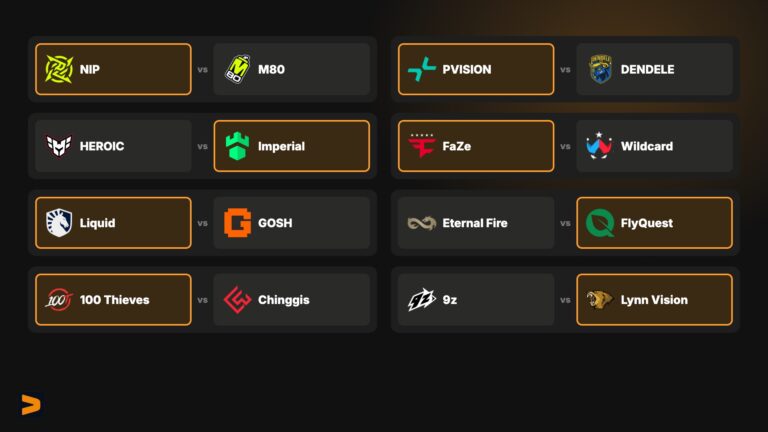
Stage 1 in Singapore starts on 24 November, and PGL have published the opening round. Every champion so far is on our list of all Major winners.