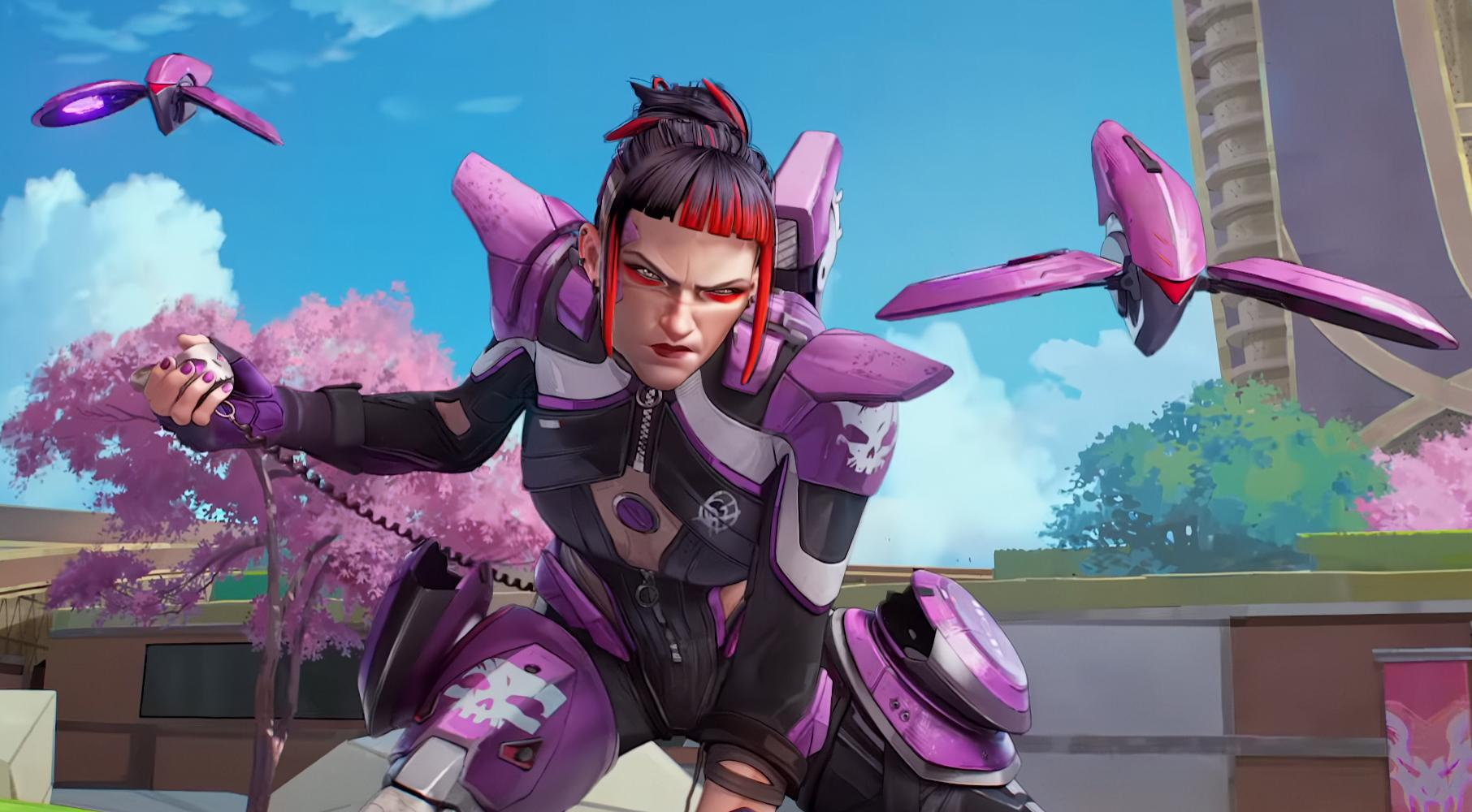






The arrival of Season 29 has sparked intense debate within the Apex Legends community regarding the high velocity kit of the newest skirmisher, Axle. While social media platforms and competitive forums are flooded with players demanding immediate numerical nerfs, the character remains unpatched. My analysis of the current meta suggests this is a deliberate choice by the designers to protect her core utility rather than treating character performance as simple numbers on a spreadsheet. By withholding rapid balance tweaks, the current sandbox strategy aims to preserve the fluid movement mechanics that define the identity of the game.
Note: I’ve been following everything Apex Legends for years now, from Balance patches, to competitive meta, and game play changes. This article is my informed opinion alone and does not reflect what Respawn feels, or might change, towards the current meta.
TLDR
- Early performance data indicates high pick rates for Axle, but immediate balancing patches have been withheld to protect her core movement identity.
- Anticipated design pathways indicate modifications will likely target Nitro Gate deployment frequency and perk availability instead of world lifetime limits.
- High skill interactions like tap strafing through speed boosts will remain functional due to their self regulating nature across skill brackets.
- Legacy movement characters are scheduled for targeted updates to ensure structural viability alongside modern toolkits.
Analyzing the Current State of Skirmisher Balance

Having followed the evolution of the competitive landscape in Apex Legends for years, I believe the choice to delay aggressive adjustments stems from historical lessons within the sandbox. Rushing a balance patch often creates long term structural problems, which was evident when Ash was nerfed too quickly after her debut and permanently lost her competitive edge. By letting performance metrics mature, the foundational mechanics of a character can be evaluated in relation to the entire ecosystem rather than in isolation. My perspective is that the upcoming balance pass will focus on incremental resource availability rather than deep structural overhauls.
Core Kit Mechanics and Target Balance Parameters
| Ability Component | Current Mechanical Status | Anticipated Design Pathway |
| Nitro Gate World Duration | Persistent until destroyed or replaced at maximum limit | Retained to encourage environmental interactivity and discovery |
| Nitro Gate Availability | Two charges accessible through specific upgrade perks | Reduction in baseline deployment frequency or extended cooldowns |
| Kickstart Ultimate Damage | Maximum 25 explosive damage upon proximity detonation | Potential reduction or removal to emphasize pure displacement |
| Interception Pylon Interaction | Bypasses Wattson pylons due to subcategory drone sorting | Under evaluation to establish clearer tactical counterplay options |
Axle’s Kickstart Ultimate Mechanics
Axle deploys a tracking drone that targets the nearest hostile player within its lateral detection bounds. Upon reaching the target, the drone detonates to deal 25 damage while launching affected players vertically into the air. This displacement effect can impact multiple grouped targets simultaneously. Environmental constraints require a clear deployment path, as confined spaces block activation and breaking line of sight causes premature detonation. The detection area features visible boundary lines on the left and right sides to indicate the tracking width, though the forward range remains unrestricted along a clear unobstructed linear path.
Technical Specifications of the Kickstart Drone
- The ultimate drone is programmed to follow a strict linear trajectory during its deployment phase, automatically mantling low barriers and traversing terrain that standard player models can climb.
- Early design iterations included a discarded prototype where Axle transformed into a driveable squad transport vehicle and another featuring static spike strips designed as defensive speed traps.
- Initial design goals prioritized team utility alongside solo playmaking, which ultimately led to the choice of moving the Nitro Gate from an ultimate ability to a standard tactical slot during early production.
Shift In Community Tracking Metrics
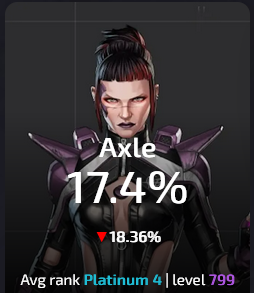
Recent data tracking shows that Axle has experienced a steady dip in usage since her initial arrival on the live servers. Her current pick rate has settled at 17.4%, representing a drop of 18.36% from her launch window high. This drop is completely normal for a newly released legend as the initial novelty fades and the player base redistributes across standard comfort picks.
The current performance trend suggests that the community is still adjusting to her presence in the sandbox. Because her kit is heavily dependent on momentum, players are still discovering optimal routing lines and exploring creative ways to integrate her speed gates with existing squad compositions. This drop in usage does not indicate weakness, but rather a transitional phase where the broader community is learning how to effectively play with and counter her unique mobility options.
The Evolution of Character Utility and Movement Creep
Over the past four years, the title has transitioned from a gunplay first shooter into a legend forward experience where character selection dictates operational pacing. This evolution has introduced a notable movement creep, as newer mechanical designs frequently outclass the utility of legacy characters. Applying a strict world lifetime timer to Nitro Gates has likely been bypassed because persistent world structures foster unique tactical scenarios, allowing separate squads to utilize abandoned infrastructure left behind in the environment. Restricting the frequency of the gates through resource management forces players to be more deliberate with placement without stripping away unexpected moments of discovery.
Advanced physics chains like tap strafing through a Nitro Gate speed boost will not be disabled or artificially penalized. These complex input combinations naturally regulate themselves because their severe execution requirements restrict their practical use to upper tier competitive environments, rarely impacting casual lobbies. Instead of lowering the ceiling on new kits, the long term solution involves bringing legacy skirmishers up to modern standards, ensuring classic characters receive unique updates that celebrate their original design philosophies.
