




The government has confirmed that chat with strangers in games will be switched off for under-16s, which would change how young players experience CS2 matchmaking in Britain.
The UK government plans to stop under-16s from talking to strangers in online games. Ian Murray, the Minister for Creative Industries, Media and Online Safety, confirmed the plan in a House of Commons debate on 2 November, held after more than 217,000 people signed a petition against the coming social media ban for under-16s.
The claim has spread on X as a ban on in-game voice chat. That is close, but not the full picture. The official record shows the target is communication with strangers, and Murray said matchmaking itself will stay.
What the minister said
Murray told MPs that the social media ban will be passed before the new year and take effect in spring 2027. Rules on specific features in games follow after that:
We will then bring forward a host of regulations on features and functions, including stranger communications, which is the biggest problem with Roblox and some of the other issues that hon. Members have raised. That will allow gamers to continue to have the functionality of stranger pairing, but without the ability to talk to strangers in a gaming context.
The plan is not new. When the ban was first announced in the Commons on 15 June, the then Secretary of State Liz Kendall said the government would “ban communication with strangers, including in gaming”. She added that games are not part of the blanket ban itself, and that stranger communication will be switched off by default for 16 and 17-year-olds as well.
None of the regulations have been published yet. How “strangers” will be defined, and how players will prove their age, is still open. Murray said in the debate that the government is still weighing whether age checks should sit with app stores, devices or each platform.
What it means for Counter-Strike
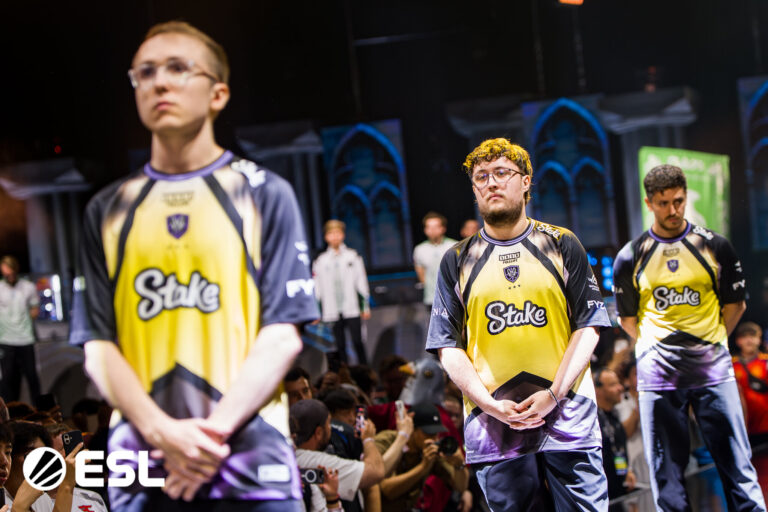
For CS2 the change could be bigger than for most games. Matchmaking and Premier regularly put players on a team with people they have never met, and voice comms are how rounds get called, information gets passed on and teammates learn to play together. If a UK player under 16 is queued with four strangers, the plan as described would leave them in the server but out of the conversation. Players aged 16 and 17 would have the same setting by default, though they could switch it back on. The same questions would apply to third-party platforms such as FACEIT.
Valve has already adapted Steam to British law once. Since August 2025, UK users have needed a credit card on their account to view mature content under the Online Safety Act. That shows one way age checks could work in practice. How Valve would handle chat with strangers in CS2 is not yet known.
The rules only apply in the UK. Australia, which banned social media for under-16s first, and other countries looking at similar laws will be watching how it works out.


Criticism from players
The campaign group Gamers’ Voice criticised the plan in a statement on 3 November. The group reads the proposal as requiring all gamers to prove their age before they can use chat features. Spokesperson Tom Shannon said:
Gaming isn’t simply another form of social media. When young people join a gaming guild, work together in a team or make friends through a shared hobby, they are participating in a social activity that can be enormously positive.
The group also warned about the cost for UK studios, older games that cannot be updated and the privacy risks of age checks. Dexerto was among the first outlets to report the minister’s comments.
How likely is it to happen?
Some form of the rule is very likely to become law, though probably not in its strictest form and not soon.
The government does not need a new act of Parliament. As Tony Vaughan, who opened the debate, pointed out, the power already exists under section 214A of the Online Safety Act 2023, so the rules can come in as regulations. MPs get a vote on them, but that is a far shorter process than a bill. Labour have a large Commons majority, the plan has stood since June and survived the change of Prime Minister, and Murray called it “a commitment”. Even MPs who doubted the social media ban singled out stranger contact in games such as Roblox as a problem that needs fixing.
The details are where it could change. The gaming rules only follow after the social media ban takes effect in spring 2027, and no draft or date exists yet. The government still has to decide who counts as a stranger, how ages are checked and what happens to older games that cannot be patched. In June, Liberal Democrat MP Tom Gordon asked what the plan would cost UK studios, and campaign groups such as Gamers’ Voice are already pushing back. Pressure like that tends to soften rules rather than stop them.
The most realistic outcome is that chat with strangers is switched off by default for under-16s, games have to check ages, and talking to friends stays allowed. For a UK teenager queuing for Premier, that would most likely arrive at some point in 2027 at the earliest.