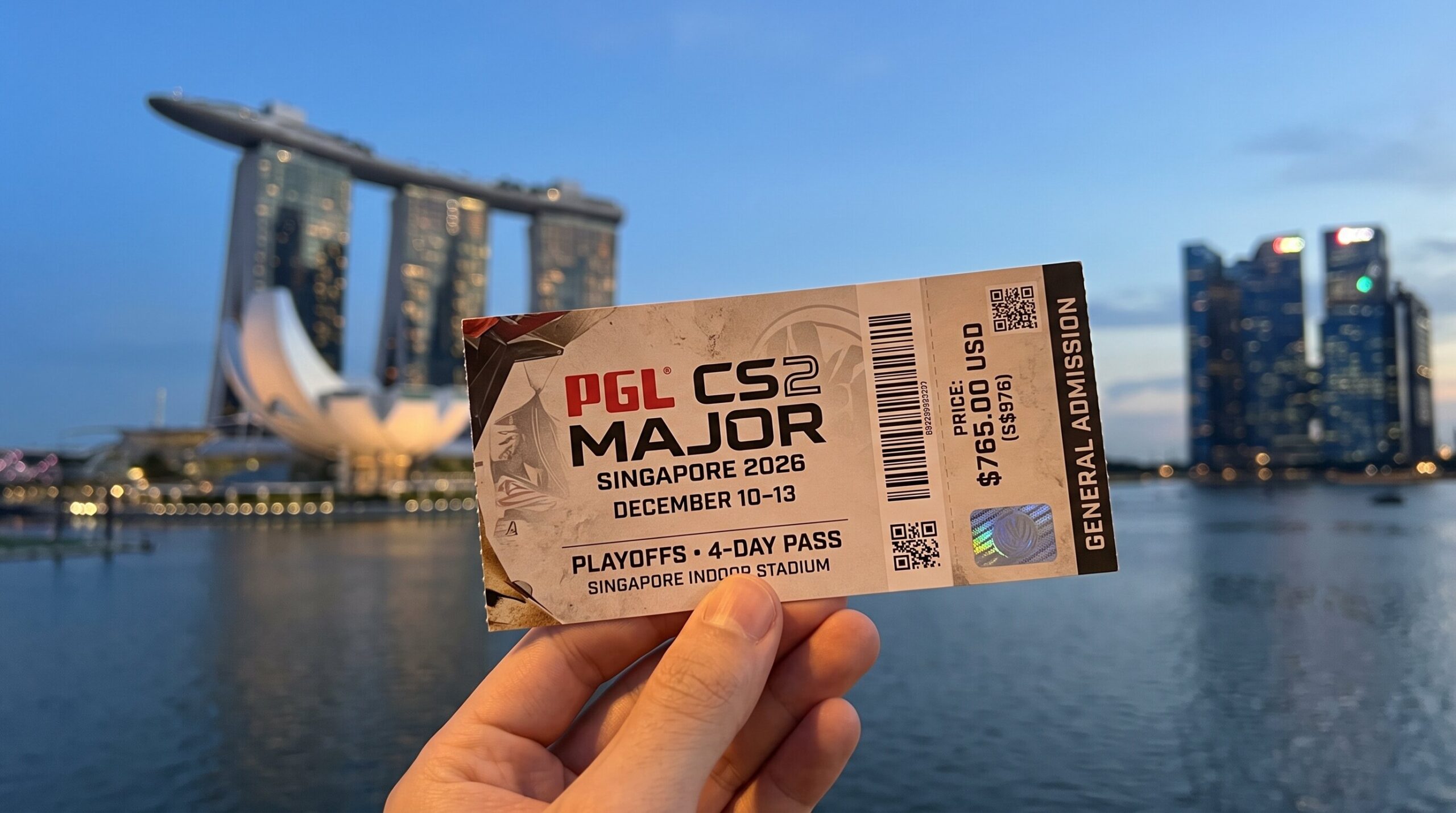




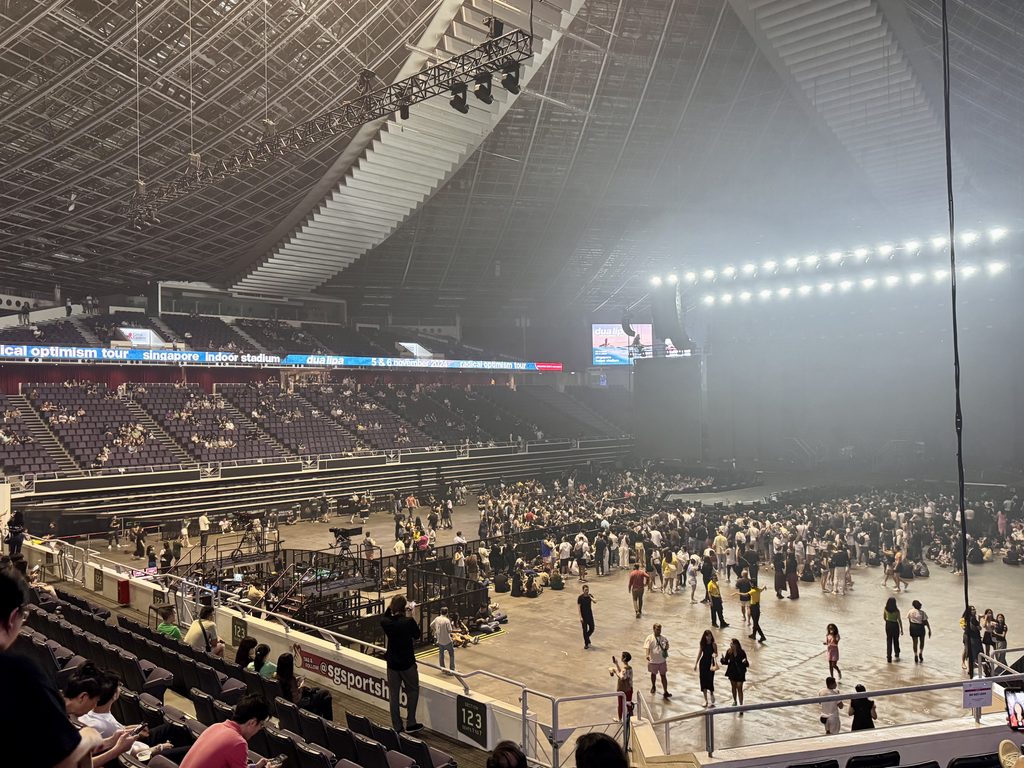
The announcement of the PGL Counter-Strike 2 Major Singapore 2026 brought the highest tier of competition to Southeast Asia for the first time. Scheduled for December 10 to 13 at the Singapore Indoor Stadium, the event quickly generated massive attention globally.
However, excitement has been partially overshadowed by the high price of admission. A four-day general admission pass for the playoff stage costs approximately $765 USD, which converts to S$976. This represents a premium of over 200 percent compared to recent Majors across Europe, North America, and China.
PGL has chosen a free seating format for the event, so first in line gets the best seats in the arena when the gates open every day.
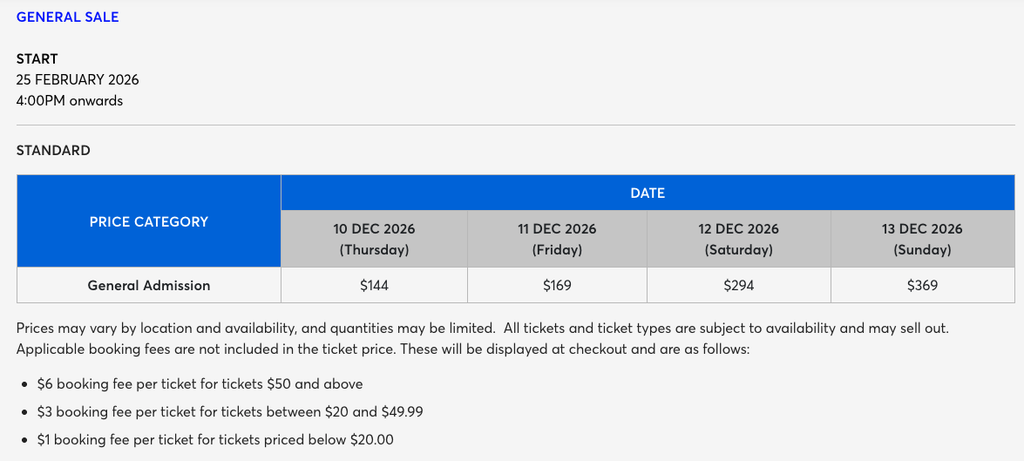
Ticket sales tell a clear story
Tickets for the PGL CS2 Major Singapore went on sale on February 25, 2026. Months later, the event is still not sold out.
To put this into perspective, the BLAST.tv Austin Major sold out in just six hours. The IEM Cologne Major sold out in minutes, and the StarLadder Budapest Major also ended up completely sold out. The slow movement of tickets in Singapore suggests that the $765 price point is testing the absolute ceiling of what consumers are willing to pay.
Pley.gg has reached out to PGL to ask about the current status of ticket sales and whether the tournament organizer believes the $765 ticket is a fair price for fans. PGL has not yet responded to our request for comment. You can buy tickets for the Singapore Major here.
The cost of living factor
To understand the magnitude of the Singapore Major’s pricing, looking at the ticketing structures of other recent and upcoming Major Championships provides clear context. All these events are governed by Valve and feature identical $1.25 million base prize pools.
The disparity is glaring. A four-day pass in Singapore costs roughly three to four times more than equivalent tickets for Budapest, Shanghai, or Cologne. The most telling comparison is with Copenhagen. The Danish capital is globally renowned for an exceptionally high cost of living, yet the 2024 PGL Major there cost only about $260 USD for a four-day arena pass.
The cost of living index used for comparison below is sourced from Numbeo, a global database of consumer prices, which uses New York City as the baseline score of 100.
| Event | Host City | 4-Day Ticket Cost (USD) | Cost of Living Index |
| PGL Major Singapore | Singapore | $765 | 90.8 |
| PGL Major Copenhagen | Copenhagen, Denmark | $260 | 86.8 |
| BLAST.tv Austin Major | Austin, USA | $250 | 71.2 |
| IEM Cologne Major | Cologne, Germany | $228 | 71.2 |
| Perfect World Shanghai Major | Shanghai, China | $208 | 40.5 |
| StarLadder Budapest Major | Budapest, Hungary | $183 | 55.5 |
High baseline costs for arena events
The sheer cost of operating in Singapore establishes a brutal financial floor for tournament organizers. Renting commercial real estate in the Kallang district costs significantly more than securing venues in Central Europe or the American South. Compounding this issue are recent inflationary pressures, which increase the cost of housing production staff, flying in 32 teams, and importing specialized broadcasting equipment.
To provide perspective on how expensive live esports events have become globally, recent insights from the League of Legends scene offer a sobering baseline. Bertrand Amar, CEO of French esports tournament operator NEO, recently detailed the massive expenses of staging a LAN event in France. Renting a tier-one stage comparable to the one used at Paris Games Week runs between 20,000 and 30,000 euros per hour. For a lengthy best-of-five match, that works out to roughly 100,000 euros just in production and stage costs.
Producing a single day requires an operating budget of 100,000 to 150,000 euros without an extravagant setup. The largest standalone global events can easily run up a final bill of two to three million euros. Taking these baseline production costs and transposing them into Singapore places immense financial pressure on the organizer.
The Valve sticker revenue change: A better deal for tournament operators
While the high cost of doing business in Singapore is the baseline, structural changes implemented by Valve Corporation regarding in-game sticker sales also play a role in the tournament economy.
Before the IEM Cologne 2026 Major, tournament organizers did not receive any share of the lucrative in-game sticker or Viewer Pass revenue. Valve directed the entirety of the 50 percent community revenue pool exclusively to the participating esports organizations and their players. Organizers relied entirely on traditional event monetization and direct developer subsidies to achieve profitability.
The IEM Cologne 2026 Major introduced a foundational shift, granting the tournament organizer a fixed 5 percent royalty from the total Major Shop and Viewer Pass gross revenue. Valve retained 50 percent, while teams and players split the remaining 45 percent.
Simultaneously, Valve removed randomized sticker capsules in favor of a dynamic, token-based direct purchase system. Market analysts and team representatives estimate that this new pricing model caused sticker sales volume to drop between three and ten times compared to previous events. Some organizations saw their sticker earnings fall from around $600,000 down to just $120,000.
Consequently, realistic earnings assumptions for a tournament organizer hosting a Major under the new economy likely fall into the low single millions, an estimated $1 million to $3 million per event. Despite this severe volume contraction, the 5 percent royalty still introduces a highly lucrative, zero-overhead revenue stream that significantly improves the baseline financial viability of hosting a Counter-Strike Major. This new income source somewhat speaks against the necessity for PGL to set such an extreme ticket price.
A wallet-friendly alternative on the horizon
Other tournament organizers are taking note of the pricing controversy and adjusting their strategies for the region. BLAST is scheduled to host an event in Singapore in March 2027 and has addressed the community’s concerns regarding ticketing costs.
In a comment provided to Pley.gg, BLAST VP of Destinations and Market Development James Woollard outlined their approach.
BLAST undertakes [extensive] benchmarking against similar events within the local market to ensure that tickets are priced fairly for fans,” Woollard stated. “We ensure that pricing is accessible and driven by market norms including, in some cases, working with leading local promoters to benchmarking these prices effectively.
Woollard emphasized that they try to offer choices to fans, including single-day, multi-day, weekend, and premium tickets. They have also introduced fan packages with Match Hospitality, allowing fans coming from outside the host city to benefit from discounted rates if they buy tickets, hotels, and premium experiences together.
If we look ahead to future events yet to go on sale, we’re incredibly excited to return to Singapore with BLAST Premier in March 2027,” Woollard added. “We will soon be launching a number of tickets at a fair, reasonable and benchmarked market value. We are confident it will be the most wallet-friendly CS event in Singapore, and will deliver real value for fans.
The ongoing ticket sales for the Singapore Major will ultimately test what the market is willing to bear.
