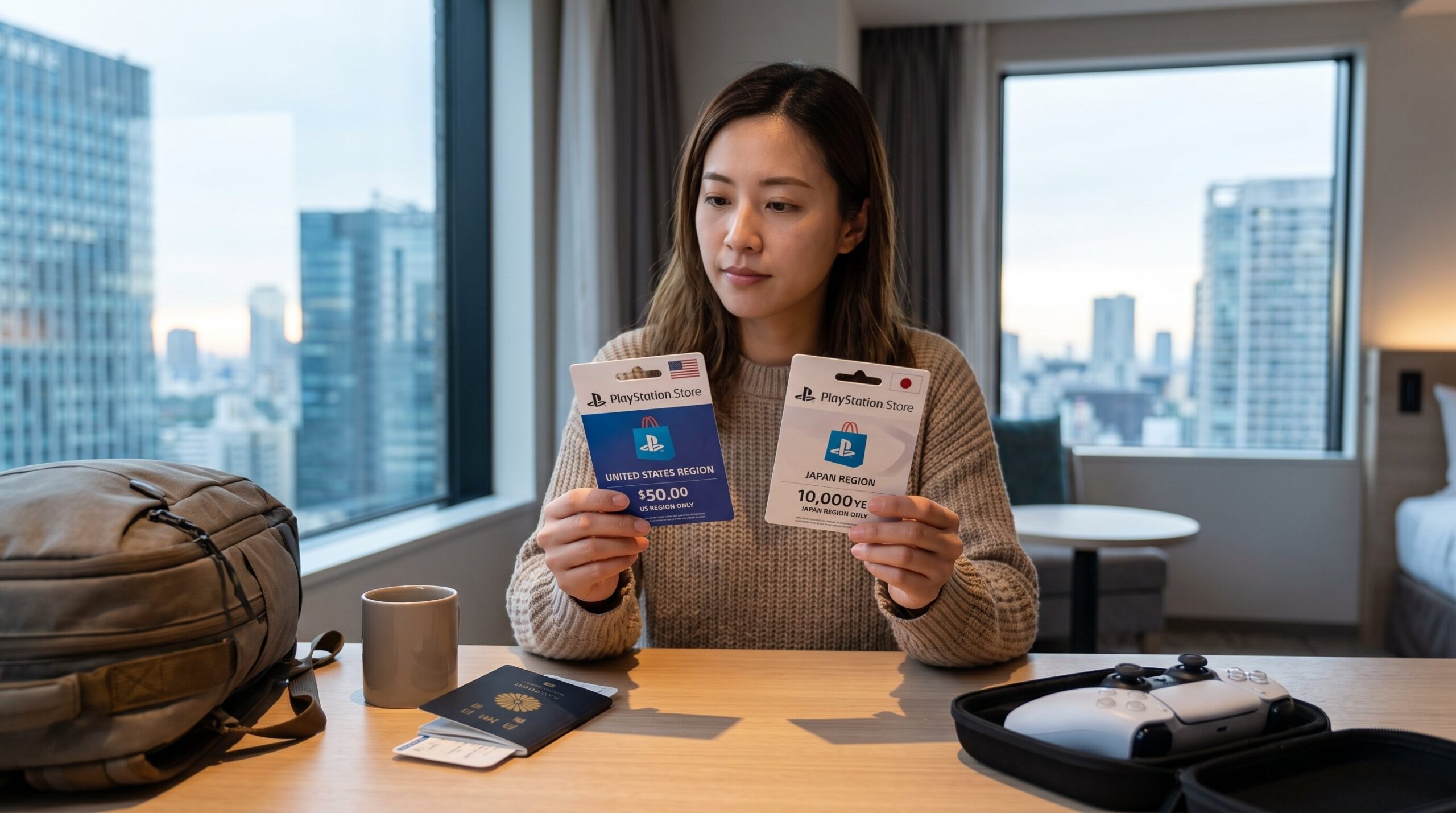







Travel can change a gaming setup’s surroundings without changing the account behind it. For PlayStation players, that distinction is central: Store content and services vary by country or region, while an account’s selected country or region stays in place after creation. Planning purchases around that established setting keeps decisions focused on compatibility instead of a traveler’s temporary location.
A PS Store gift card adds funds to an eligible PlayStation account. Buyers commonly use those funds to pay for games, add-ons, or subscriptions through the Store. For an established US account, a PSN gift card from Eneba is an example of region-labeled digital credit, with United States cards identified in US dollars on the US page.
Account region versus travel location
Taking the same PS4 or PS5 abroad does not automatically alter the country or region attached to the account. The console travels with the player, but Store access, voucher redemption, and purchase rules remain tied to the established account region. That is why a familiar account setting is a more useful reference point than the country where a player happens to be staying.
PlayStation requires voucher codes to match the account’s country or region for activation. A US account therefore pairs with a voucher clearly marked for the United States, rather than a card chosen only because it was bought during a trip. PlayStation also states that the account country or region should match billing information to enable purchases and downloads.
Account details are easy to review before departure. Account Management, the residential-address area, and the account-information section of the PlayStation App can identify the country or region linked to the account. Checking that detail early gives travelers a clear basis for selecting compatible credit while away from the console.
Comparing two purchase approaches
The less reliable approach treats physical location as the main factor: buy a voucher associated with the current country and assume it suits the account. The practical alternative begins with the existing account region, then matches the voucher label to it. This comparison is simple, yet it avoids confusing travel plans with the rules that govern Store credit.
Platform convenience deserves the same attention. Before buying, travelers can confirm that a digital product is intended for their PlayStation platform and established account region. Product pages that state regional and platform information support this quick compatibility check, keeping the purchase aligned with the player’s usual setup.
Physical games add one more comparison point. A disc purchased in one market and a downloadable add-on purchased for another region may not work together, since some add-ons require a region match with the game disc. Travelers who use physical games can compare the disc’s market with the add-on’s region before choosing extra content.
Planning for predictable access
The strongest travel plan keeps each decision connected to the established account. Check the account region, select matching credit, and confirm platform details before purchasing. This approach respects the regional structure already attached to the account instead of treating a trip as a reason to change purchasing logic.
Eneba fits this comparison as a digital marketplace where travelers can review regional and platform details while selecting digital products. Predictable access comes from matching the right credit to the right account and considering disc compatibility before adding content.