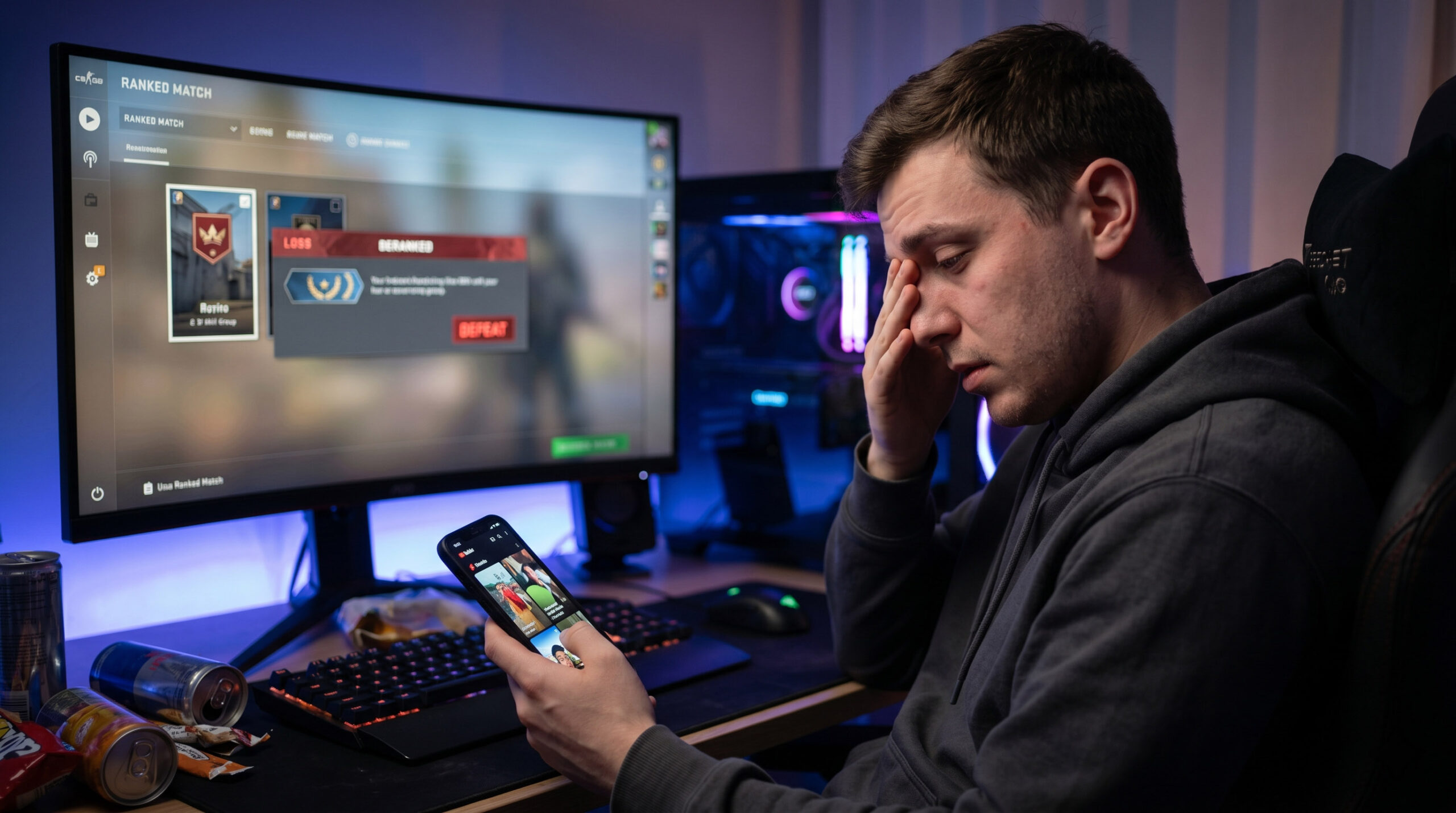


The ranked grind in Counter-Strike 2 has become a defining feature of the competitive gaming experience, but for many serious players it has also become a defining source of burnout. Forty-minute matches, demanding queue times, the constant pressure of rank protection and the cognitive intensity of high-level competitive play all add up to a mental load that even dedicated players struggle to sustain across long sessions. Many CS2 players have started to recognize this fatigue as a real factor in their gaming lives, and the response has been a search for faster, lighter entertainment formats that can fit between intense ranked sessions and provide the kind of mental decompression that the competitive grind itself does not offer.
The fatigue is not just about session length. It is about the specific kind of cognitive demand that ranked CS2 imposes. Every round requires careful economic decisions, precise aim, communication with teammates, awareness of map control, prediction of opponent behavior and recovery from individual mistakes that can swing matches in either direction. This level of sustained focus is genuinely exhausting, and players who have spent a full evening climbing the ranked ladder often need a different kind of entertainment afterward, one that engages the brain in lighter ways and does not demand the same intensity of focus.
Why traditional decompression options no longer fit
The decompression options that earlier generations of competitive gamers relied on often do not work as well for current CS2 players. Watching streams of other players competing at high levels can deepen the immersion in competitive content rather than relieve it. Switching to another competitive game often replicates the same cognitive demands in a different surface. Even single-player campaigns can feel like work when their pacing is slow or their commitment requirements are heavy. The format that genuinely decompresses a tired competitive gamer needs to be different in kind, not just lighter in difficulty.
Players have started exploring quick-format alternatives that deliver clear entertainment payoffs in short timeframes without demanding sustained cognitive engagement. Platforms designed around fast sessions, instant access and minimal commitment have benefited disproportionately from this shift, and the audience for these formats now includes serious competitive players who would have dismissed casual entertainment as beneath them a few years ago. The fatigue has been real enough to override older identity-based aversions to lighter formats.
The appeal of platforms built around speed and accessibility
Quick-format entertainment platforms have positioned themselves naturally to serve the post-ranked decompression need. The same competitive players who spend hours grinding ranked matches often find themselves seeking out spaces like Casino Click social casino and similar quick-play platforms during their wind-down time, because these formats offer the opposite of what ranked CS2 demands: minimal cognitive load, no long-term consequences, fast resolution and entertainment value that does not require sustained focus to extract. The contrast with their primary competitive activity is exactly what makes these platforms effective for decompression.
This pattern matters for how operators think about their audiences. The competitive gamer who decompresses with quick-format entertainment is not a casual user in the traditional sense. They are bringing a serious gaming background, an analytical mindset and high expectations for production quality to a format that has historically served less demanding audiences. Platforms that recognize this and build accordingly retain these users far better than platforms that treat them as casual newcomers.
The casual gaming heritage that newer audiences inherited
The cultural heritage of casual gaming runs deep enough that even competitive players have history with it. The nintendo wii most popular games library introduced a generation to the concept of accessible, short-session, social gaming experiences in a way that shaped how those same players would later engage with online casual formats. The Wii era proved that audiences appreciated games that respected their time and did not demand intensive commitment, and the lessons from that period have informed how modern quick-format platforms are designed.
Many current CS2 players grew up playing on the Wii or watching family members enjoy it, and they internalized the appeal of lightweight gaming experiences from those formative years. When the demands of competitive gaming pile up and a break becomes necessary, the appeal of returning to that lightweight gaming feeling makes intuitive sense. The format speaks a familiar language, even when the specific platforms have changed.
The mental sustainability angle that changed the conversation
The shift toward faster entertainment formats also reflects broader awareness of mental health considerations within the competitive gaming community. Burnout has become a recognized issue at all levels of competitive play, from professional teams to dedicated amateurs, and players have become more thoughtful about how they manage their cognitive resources over long stretches. Mixing intense competitive sessions with lighter decompression activities is now considered a smart approach rather than a sign of weakness, and the players who incorporate this rhythm into their gaming lives often perform better in their competitive activities as a result.
The community discussions around this topic have matured significantly. Pro players openly discuss their decompression habits. Content creators talk about how they manage attention across different types of gaming. Coaches recommend specific breaks and lighter activities to their teams during long tournament cycles. The result is a competitive gaming culture that takes mental sustainability more seriously than earlier generations did.
The wind-down format that complements the grind
The fatigue from ranked match grinding in CS2 is a real phenomenon, and the players experiencing it have responded by building gaming routines that include faster, lighter entertainment options alongside their competitive sessions. This combination produces a more sustainable approach to gaming as a long-term hobby, and the platforms that serve the decompression side of this equation are benefiting from a serious-gamer audience that historically would not have considered them.
The pattern is not unique to CS2. Players across many high-intensity competitive games are recognizing similar fatigue patterns and reaching for similar solutions. The competitive gaming culture that emerges from this shift will be healthier, more sustainable and more thoughtful about how players manage their cognitive resources than the culture that pushed continuous high-intensity play as the only legitimate way to engage with games seriously. Faster entertainment formats are not a retreat from competitive gaming. They are a complement to it, and the players who build their routines around this combination tend to enjoy both more thoroughly than those who try to sustain pure competitive intensity indefinitely.
