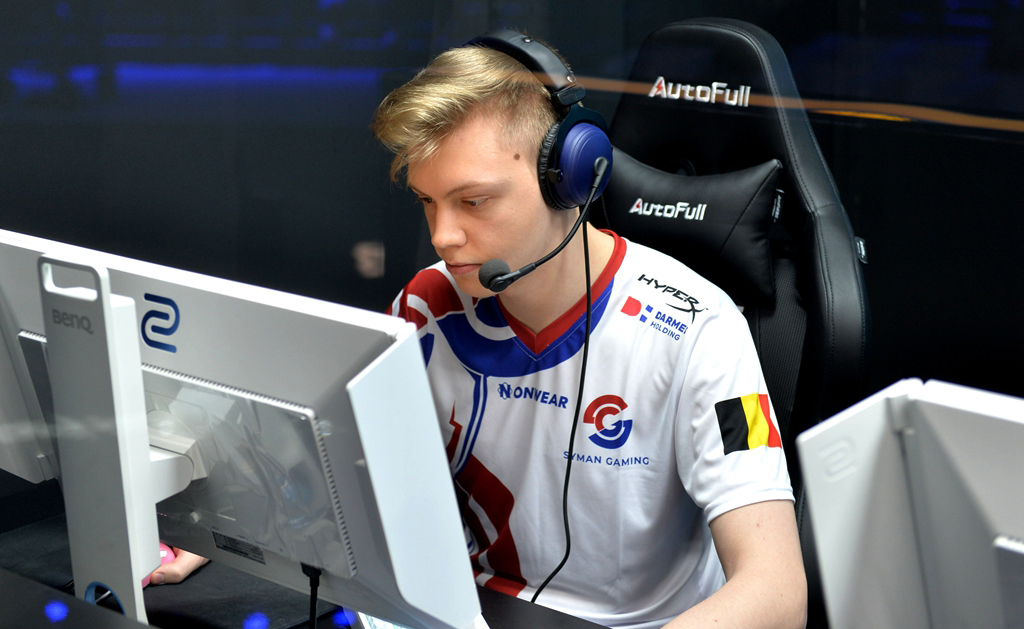




Counter-Strike player Nicolas “Keoz” Dgus has accused his team, kONO, of breaching his contract by failing to pay his guaranteed December salary.
In a public thread posted on January 18, Keoz wrote that the organisation behind Ukrainian football player Yevhen Konoplyanka had not paid his December salary despite a contractual obligation to pay by a set day each month.
“I am asking for nothing more than the minimum salary guaranteed by the contract,” he said, adding that instead of payment he received ‘pressure, threats, and attempts to discredit me.’”
Keoz also claimed he was dismissed when he raised the issue.
“When I asked for my unpaid salary, I was told that ‘$amountOfSalary won’t make anyone richer’ and that I should stop insisting,” he wrote. “This is not about ‘making someone richer’. This is about respecting a signed contract and basic professional standards.”
Not benched
Keoz argued that no internal decision justified a salary reduction or delay. He said he was not “officially benched, suspended, or sanctioned in any way,” and claimed the organisation decided not to use the roster from the beginning of December.
“The decision of organisation does not allow salary reduction based on ‘benching’, match participation, or internal decisions. Still, payment was withheld.”
He further alleged that only after he demanded his salary did he receive serious claims based on unnamed sources.
“After more than a month of silence and only after I demanded payment, I suddenly received claims based on ‘anonymous information’ accusing me of ‘match-fixing’ along with a request to take a polygraph test,” he wrote.
Keoz said integrity procedures should not be used as leverage in a salary dispute, describing it as “a tool to avoid paying salaries already owed.”
Keoz added he tried to resolve the matter privately, and stated he issued a formal legal demand before going public.
kONO rejects the allegations
kONO responded in a statement posted roughly a day later, denying that it refused to pay and insisting it has “always fulfilled and continues to fulfill all of its obligations to employees and players.”
The organisation disputed Keoz’s framing of events.
“Information claiming that the player was denied salary payments or was allegedly told ‘not to insist on payment because the amount is insignificant’ does not correspond to reality,” kONO wrote.
Instead, kONO said the underlying issue was an “outstanding financial debt” owed by the player to the team, which it claims should have been resolved months earlier. According to the organisation, it “offered the most convenient repayment schedule possible,” and says that, “At the initiative of the player himself,” an option was agreed where the salary would be paid in full with “mutual settlements” accounted for in the final month of the year.
kONO also acknowledged that the “insignificance of the amount” line was said, but argued it was mentioned only in a private context and not as a refusal to pay. It described the intent as confirming there was “no intention to avoid financial obligations,” while emphasizing that “debt obligations remain debt obligations.”
Roster usage
On the question of the roster not playing, kONO pushed back on the idea that it deliberately kept players inactive. It called such claims “illogical,” arguing there would be no reason to keep a roster inactive while still carrying the costs.
Regarding the integrity angle, kONO confirmed that Keoz was asked to undergo what it called a “standard integrity review procedure,” while stressing that no public accusations were made. It quoted wording it says was used in its request:
“At this stage, no conclusions or accusations have been made against you. However, based on the information received, the Team Owner has reasonable grounds to initiate an integrity review in accordance with the Clause.”
The organisation described such reviews as “common practice” and “a standard preventive procedure, not a form of accusation.”
kONO also challenged Keoz’s claim that he wanted to resolve the situation privately, saying that “at the initiative of the player, communication was moved exclusively to an official written format.”
The organisation additionally claimed it received letters from Keoz and individuals presenting themselves as his agents warning that if payment was not made within three days, a “reputational attack would follow.”
kONO said it requested confirmation of their authority due to confidentiality terms in the contract, and alleged that no further responses followed. In its closing remarks, kONO said it does not accept “ultimatums, pressure, or reputational threats,” and that disputes should be handled “within the framework of the contract and the legal field.”
