




Brazil’s Ministry of Justice wants the country’s data protection authority to prioritise six games with loot boxes and no age verification. Counter-Strike 2 is on the list, but the game has not been banned and no breach has been found.
Brazil’s Ministry of Justice and Public Security has asked the National Data Protection Authority (ANPD) to monitor video games that sell loot boxes without checking how old their players are. The request is set out in Technical Note No. 55/2026, which the ministry’s National Secretariat for Digital Rights published on 15 October.
The note reviews the first six months of the ECA Digital, Brazil’s digital child protection law, and recommends that six titles are prioritised:
- Counter-Strike 2 (Valve)
- Call of Duty (Activision Blizzard)
- NBA 2K26 (2K)
- WWE 2K26 (2K)
- Genshin Impact (HoYoverse)
- PUBG Mobile (Tencent/Krafton)
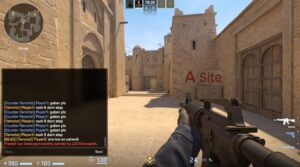
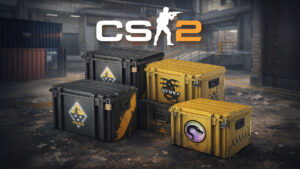
For CS2, the note points to cases that are opened with a paid key and contain weapon skins.
An 18+ rating is not enough
All six games are rated as not recommended for under-18s in Brazil, and all six still offer loot boxes without age verification. According to the ministry, that is the problem. The note says the 18+ rating is relevant, but not sufficient on its own to show that children and teenagers cannot buy or use the feature. Warnings and published drop odds do not replace age checks either.
The ministry was clear that it has not found any company in breach. The review is “preliminary and not exhaustive” and does not, by itself, allow any conclusion about whether a supplier complies with the law, it wrote. The goal of the monitoring is to check whether the age verification in these games actually keeps minors out.
What the law says
The ECA Digital (Law 15.211/2025) was passed in September 2025. Its Article 20 bans loot boxes in games aimed at children and adolescents or likely to be accessed by them. A decree from March 2026 (Decree 12.880/2026) set out how companies can comply. Under its Article 23, Valve and the other publishers have three options:
- verify users’ ages and block the feature for children and adolescents
- offer a version of the game without loot boxes
- switch the feature off by default for all Brazilian users
The law does not ban loot boxes for adults. In its note, the ministry compared loot boxes to betting, citing their “functional similarity”, and pointed to studies that link loot box spending to problem gambling, psychological distress, impulsivity and financial harm. It also stressed that this link alone does not prove that loot boxes cause clinical disorders.
The ministry examined 15 popular titles in total. Many had already adapted by removing paid random rewards, raising their age rating to 18, adding age verification or changing the mechanics. The note was also sent to the Ministry of Health’s mental health department for future studies.
Not Valve’s first loot box fight
CS2 cases have run into national rules before. In 2018, Valve stopped players in the Netherlands and Belgium from opening containers after gambling regulators in both countries said loot boxes could break their gambling laws. In France, Valve introduced the X-ray scanner in 2019, which shows players the item inside a case before they pay for it.
Brazil’s courts have also looked at the issue. The ministry’s note lists civil lawsuits brought by the child rights association ANCED at a children’s court in the Federal District, in which several platform holders and publishers were ordered to pay collective damages over loot boxes. Valve’s share was 10 million reais. The rulings can still be appealed.
What happens to CS2 cases in Brazil now depends on the ANPD, which will decide whether to act on the recommendation.
