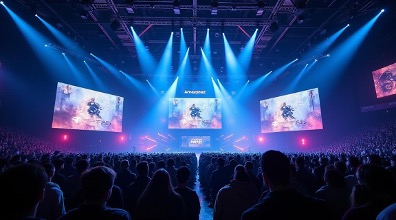





Counter-Strike 2 has built one of the most valuable virtual economies in gaming history, with rare weapon skins commanding prices that rival luxury goods. As cryptocurrency adoption grows among gamers, the overlap between CS2 skin trading and digital asset markets is creating new opportunities for players, collectors, and investors alike.
The Rise of CS2’s Multi-Billion Dollar Skin Market
The CS2 skin market has grown into a financial ecosystem worth over $5 billion as of 2025. What began as cosmetic customization in the original Counter-Strike: Global Offensive has evolved into a sophisticated marketplace where digital items function as tradeable assets. The AWP Dragon Lore, once available for a few hundred dollars, now regularly sells for $12,000 to $18,000 depending on condition and float value. The AK-47 Fire Serpent in Factory New condition commands prices above $4,000, while rare Karambit knife finishes like the Crimson Web or Fade pattern can exceed $10,000.
Valve’s decision to retire certain skin collections has created artificial scarcity that mirrors how limited-supply cryptocurrencies gain value. The Bravo Collection, Cobblestone Collection, and discontinued operation drops have turned specific skins into appreciating assets. With over 1.2 million daily active CS2 players generating constant demand, the market maintains consistent liquidity that many traditional collectible markets lack.
How CS2 Majors and Esports Fuel Skin Demand
Professional CS2 tournaments directly influence the skin economy in measurable ways. During events like the PGL Major Copenhagen 2024 and IEM Katowice 2025, viewership spikes drive increased activity on the Steam Community Market. Souvenir packages dropped during Major matches carry special stickers from competing teams, and those featuring star players like Oleksandr ‘s1mple’ Kostyliev, Mathieu ‘ZywOo’ Herbaut, or rising talents like Ilya ‘donk’ Samoilov and Ilya ‘m0NESY’ Osipov command premium prices.
The BLAST Premier World Final and Intel Extreme Masters circuits have expanded CS2’s global audience, drawing millions of concurrent viewers. Organizations like Natus Vincere, FaZe Clan, G2 Esports, and Team Vitality have become household names within the community. Their tournament runs create market ripples as fans rush to buy team stickers and commemorative items, turning competitive results into direct economic activity.
Steam Marketplace vs Third-Party Trading Platforms
Valve’s Steam Community Market remains the default trading venue for CS2 skins, but its limitations have pushed a significant portion of trade volume to third-party platforms. Steam charges a combined 15% fee on every transaction (including Valve’s cut and the CS2 game fee), caps individual listing prices at $1,800, and restricts withdrawals to Steam Wallet funds that cannot be converted to real currency. These constraints make it impractical for high-value trades.
Third-party marketplaces such as Buff163, DMarket, and Skinport offer lower fees (typically 5-10%), support real-money cashouts, and allow peer-to-peer trading without price ceilings. These platforms have captured an estimated 40-60% of total CS2 skin trade volume. More recently, crypto-integrated platforms have entered the space, enabling traders to buy and sell skins using Bitcoin, Ethereum, and stablecoins like USDT with fees as low as 2-3%.
| Feature | Steam Market | Third-Party Sites | Crypto Platforms |
| Transaction Fees | 15% combined | 5-10% | 2-3% |
| Price Ceiling | $1,800 per item | No limit | No limit |
| Cashout Options | Steam Wallet only | Bank transfer, PayPal | BTC, ETH, USDT, fiat |
| Trade Speed | Up to 15-day hold | Instant to 24 hours | Minutes (on-chain) |
| KYC Required | Steam account | Varies by platform | Yes (licensed platforms) |
| Geographic Access | Steam-supported regions | Broad (some restrictions) | Global (no banking needed) |
The Crypto Connection: Why CS2 Players Are Adopting Digital Currency
CS2 players were among the earliest mainstream gaming communities to embrace cryptocurrency, and the reasons are practical. Skin traders already understand concepts like market volatility, supply scarcity, float values (analogous to token metadata), and peer-to-peer transactions. The mental model required to evaluate whether an AK-47 Case Hardened with a rare blue gem pattern is worth $30,000 is not far removed from assessing whether a particular altcoin has genuine long-term value.
Many competitive CS2 players who spend hours studying market trends for skin investments have naturally gravitated toward platforms that bridge gaming and crypto. A growing number explore options like bitcoin casino Shuffle, which offers crypto-native entertainment alongside the kind of digital asset experiences that skin traders already appreciate. The overlap between these communities continues to expand as both ecosystems mature.

Image by Elena Kowalski
Skin Gambling’s Evolution Into Regulated Crypto Platforms
The history of CS2 skin gambling is both cautionary and instructive. In 2016, unregulated skin betting sites proliferated, allowing users – many of them underage – to wager CS:GO skins on coin flips, roulette wheels, and match outcomes. Valve’s subsequent crackdown shut down many operators, but the demand for skill-based and chance-based gaming with digital assets never disappeared.
Today’s crypto gaming platforms represent a regulated evolution of that earlier Wild West era. Licensed operators now use blockchain transparency to provide provably fair outcomes, KYC verification to prevent underage access, and cryptocurrency transactions for fast, global payments. This shift from unregulated skin gambling to licensed crypto platforms mirrors the broader maturation happening across both the gaming and fintech industries.
Understanding Skin Float Values and Rarity Tiers
Every CS2 skin has a float value between 0.00 and 1.00 that determines its visual wear condition, ranging from Factory New (0.00-0.07) to Battle-Scarred (0.45-1.00). This numerical precision creates a grading system similar to how gemstones or trading cards are evaluated. A Factory New M4A4 Howl with a float of 0.001 can be worth three to four times more than one with a 0.06 float, despite both technically being Factory New.
Rarity tiers in CS2 follow a color-coded system: Consumer Grade (white), Industrial Grade (light blue), Mil-Spec (blue), Restricted (purple), Classified (pink), Covert (red), and the ultra-rare Contraband tier reserved exclusively for the M4A4 Howl. Understanding these tiers and how they interact with collection retirement schedules is essential knowledge for anyone treating CS2 skins as investment-grade digital assets. As one analysis from Esports Charts noted, skins as an alternative to stocks have shown returns that challenge conventional investment wisdom.
Comparing Digital Asset Markets: CS2 Skins, NFTs, and Cryptocurrency
The parallels between CS2 skins, NFTs, and cryptocurrencies extend beyond surface-level comparisons. All three asset classes derive value from scarcity, community consensus, and marketplace liquidity rather than intrinsic utility. However, CS2 skins hold a distinct advantage: they exist within an active game played by millions, giving them persistent functional and aesthetic value that most NFTs lack.
Unlike many NFT projects that saw valuations collapse after initial hype cycles, the CS2 skin market has demonstrated sustained growth over more than a decade. The key difference is utility – a Karambit Doppler Phase 2 is not just a speculative asset but an item that a player actively uses and displays in every match. This combination of collectibility, utility, and trading infrastructure makes CS2 skins arguably the most successful digital asset class in gaming history.
The Role of Professional Players in Market Dynamics
Professional CS2 players influence the skin market in ways that extend beyond tournament souvenir drops. When NaVi’s s1mple was photographed using a specific weapon skin during a Major semifinal, demand for that skin spiked within hours on third-party marketplaces. Similarly, m0NESY’s rise with G2 Esports created renewed interest in AWP skins, as fans sought to emulate his loadout.
Content creators and streamers amplify these effects further. CS2 case opening streams regularly draw hundreds of thousands of viewers, and rare unboxings can cause immediate price movements for the featured skin. The connection between esports celebrity and market value creates a dynamic where competitive performance, social media presence, and skin economics are deeply intertwined. Players who build mental resilience in competitive gaming often find that discipline translates directly into better trading decisions as well.

Image by David Tanaka
Security and Trade Safety in the CS2 Economy
The CS2 skin economy faces security challenges familiar to anyone in the crypto space. Phishing attacks targeting Steam accounts remain common, with scammers creating convincing fake login pages to steal credentials and drain skin inventories. Valve’s Steam Guard mobile authenticator and mandatory trade holds provide baseline protection, but experienced traders recommend additional measures like hardware security keys and dedicated trading accounts.
API key scams represent another persistent threat, where malicious actors gain access to a user’s Steam API key and intercept incoming trade offers, replacing them with fraudulent ones. The crypto community’s emphasis on self-custody and security best practices has influenced CS2 traders to adopt similar vigilance. Two-factor authentication, regular API key audits, and verification of trade partner identities have become standard practice for anyone managing a valuable skin portfolio.
What the Future Holds for CS2 Skins and Crypto Gaming
The convergence of CS2’s skin economy and cryptocurrency is accelerating. Valve’s own policies may eventually need to adapt as blockchain-based ownership verification and cross-platform asset portability become industry expectations. While Valve currently prohibits NFT and crypto integrations within Steam, the pressure from a $5 billion secondary market operating largely outside their ecosystem may force reconsideration.
For CS2 players and collectors, the practical advice remains consistent: understand what you are buying, verify the platforms you use, and never invest more than you can afford to lose – whether in rare weapon skins or digital currencies. The skills developed in CS2’s skin market – pattern recognition, risk assessment, market timing, and community analysis – transfer directly to the broader world of digital asset trading.
Frequently Asked Questions
Q: What are the most valuable CS2 skins in 2026?
A: The most valuable CS2 skins include the AWP Dragon Lore (Factory New, $12,000-$18,000), the M4A4 Howl (the only Contraband-tier skin, $5,000-$15,000 depending on condition), rare Karambit knife patterns like Crimson Web and Case Hardened blue gems ($8,000-$50,000+), and the AK-47 Fire Serpent Factory New ($4,000-$6,000). Souvenir versions with professional player autograph stickers can multiply these values significantly.
Q: Can you trade CS2 skins for cryptocurrency?
A: Yes, several third-party platforms now support direct skin-to-crypto exchanges. Services like DMarket and various peer-to-peer trading communities facilitate conversions between CS2 skins and Bitcoin, Ethereum, or stablecoins. These transactions typically carry lower fees than Steam Market sales and allow global participation without banking restrictions.
Q: How do CS2 Major tournaments affect skin prices?
A: Major tournaments create price movements through multiple mechanisms. Souvenir package drops from Major matches become collectible items, team sticker capsules see massive volume spikes, and increased viewership brings new participants into the skin economy. Historical data shows that skin market activity typically increases 20-30% during Major tournament weeks.
Q: Is investing in CS2 skins risky?
A: Like any alternative asset class, CS2 skins carry significant risks. Valve can change game mechanics, release new skins that reduce demand for existing ones, or alter trading policies without notice. Market volatility can be extreme – the late 2025 update caused a roughly $2 billion market cap decline. Diversification and thorough research are essential for anyone treating skins as investments.
Key Takeaways
– The CS2 skin market exceeds $5 billion in value, with rare items like the AWP Dragon Lore and M4A4 Howl functioning as serious digital assets.
– Professional esports events including PGL Majors, IEM Katowice, and BLAST Premier directly drive skin market activity and price movements.
– Third-party platforms and crypto-integrated marketplaces now handle a majority of high-value CS2 skin trades, offering lower fees and real-money cashouts.
– The skills required for successful CS2 skin trading – scarcity analysis, market timing, and risk management – translate directly to cryptocurrency and digital asset markets.
– Security practices from the crypto world, including two-factor authentication and API key management, have become essential for protecting valuable skin inventories.
– The convergence of gaming economies and blockchain technology is accelerating, with CS2’s skin market serving as a proving ground for digital asset ownership models.
